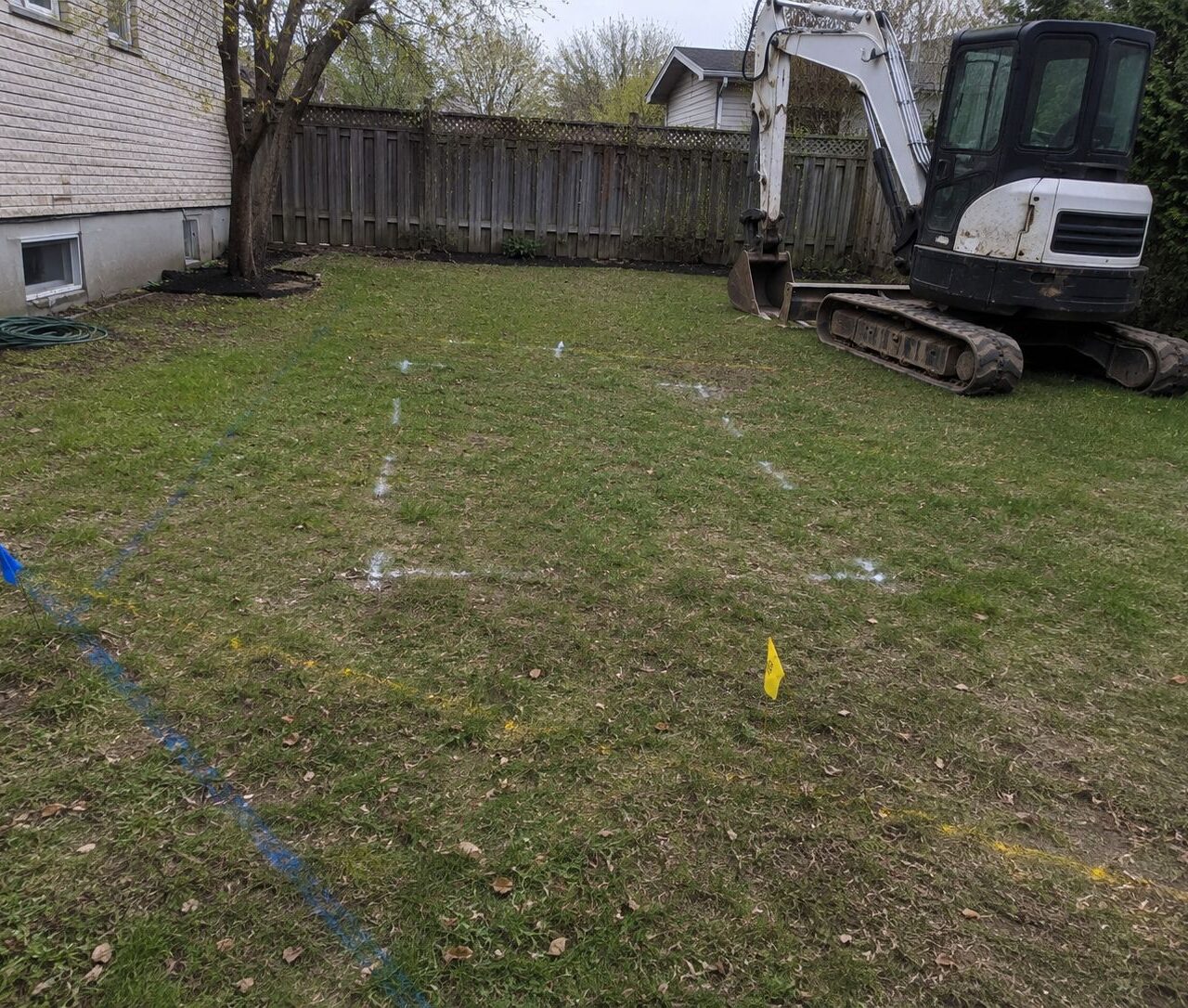

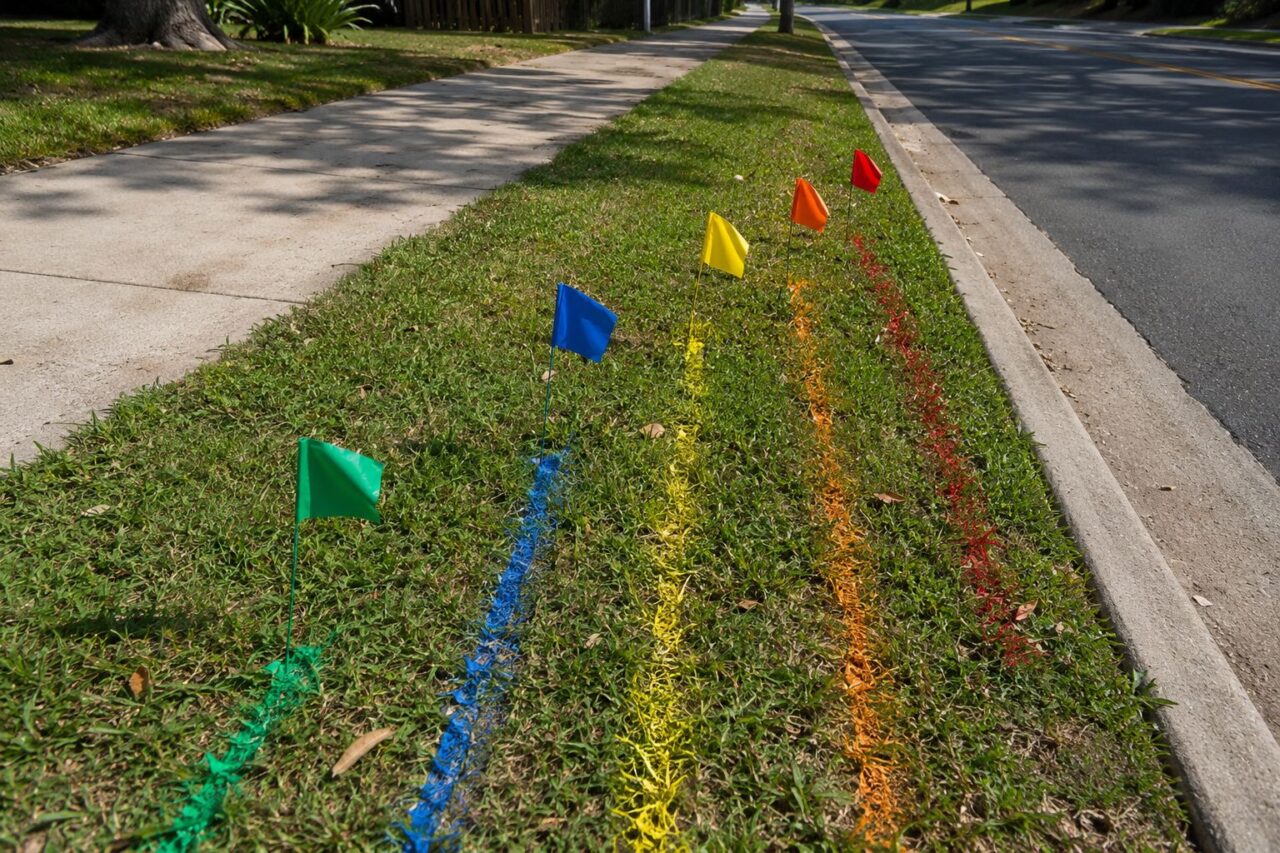
Utility Locates Part 2:
So you’ve hired a contractor.
They’re doing the digging.
Naturally, you decide to be helpful and order the utility locates yourself.
Please don’t.
We appreciate the enthusiasm.
Really.
But if we’re putting the machine in the ground, we want the locate request under our Ontario One Call contractor account.
There’s a reason for that.
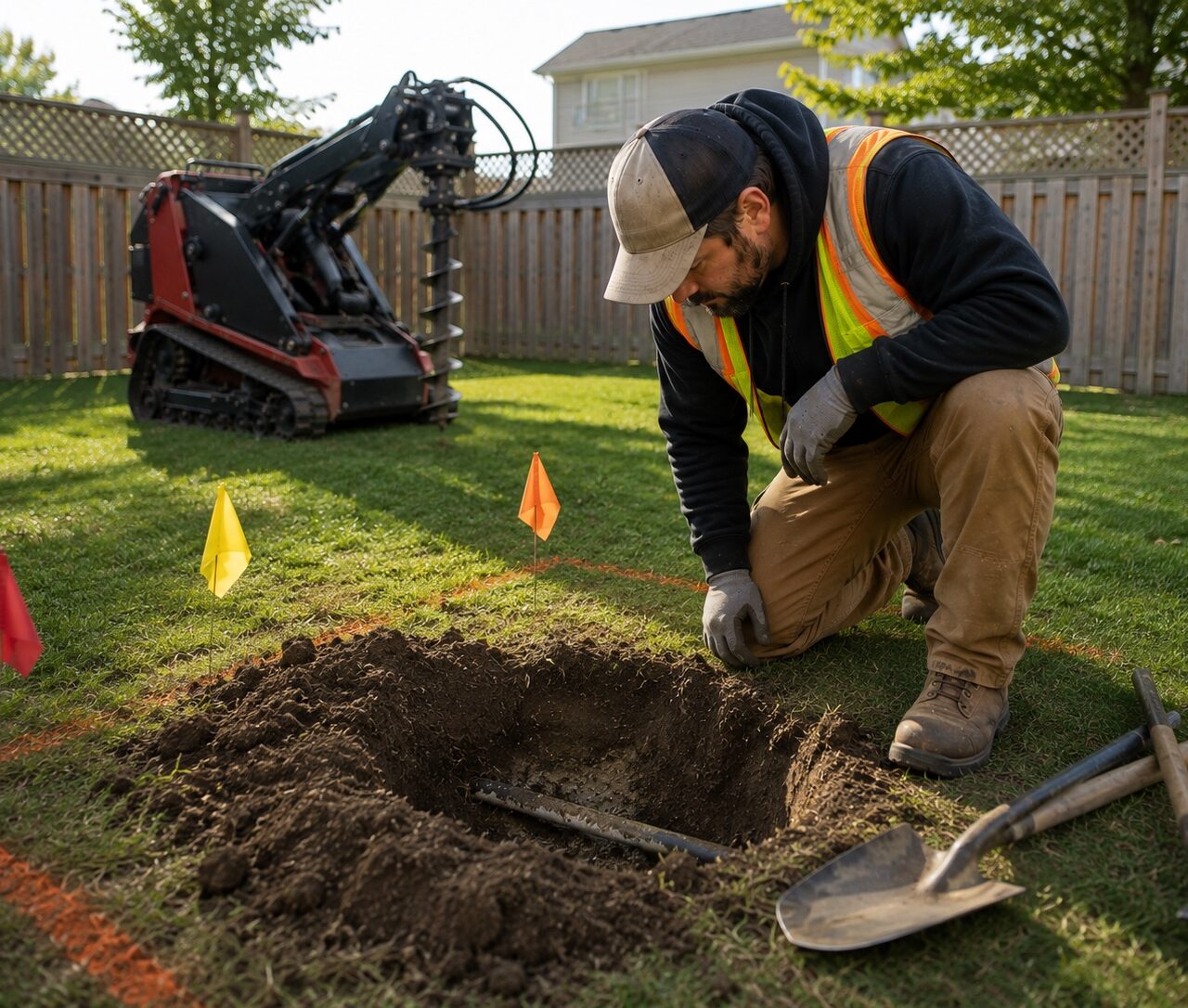
The person doing the digging should control the locate
Ontario One Call considers the person actually breaking ground the excavator.
That could technically be a homeowner, contractor or anyone else performing the excavation.
But if you’ve hired a contractor to do the digging, Ontario One Call itself says it’s best for the person or company doing the digging to request the locates.
That makes sense.
We’re the ones who know:
- exactly where we’re digging
- how deep we’re digging
- what equipment we’re using
- the boundaries of the work area
- when we’re planning to start
- what we’re actually installing
A locate isn’t just “please paint my backyard.”
It’s tied to a specific excavation.
A locate for one job isn't automatically a locate for another
This is where things get surprisingly technical.
The locate request describes the excavation area and the work being performed.
If someone requests a locate for a little garden project and then a contractor arrives to drill 30 fence posts across the entire property, those aren’t necessarily the same excavation.
The contractor needs to make sure the locate documentation actually covers the work being performed.
Same property doesn’t automatically mean same dig.
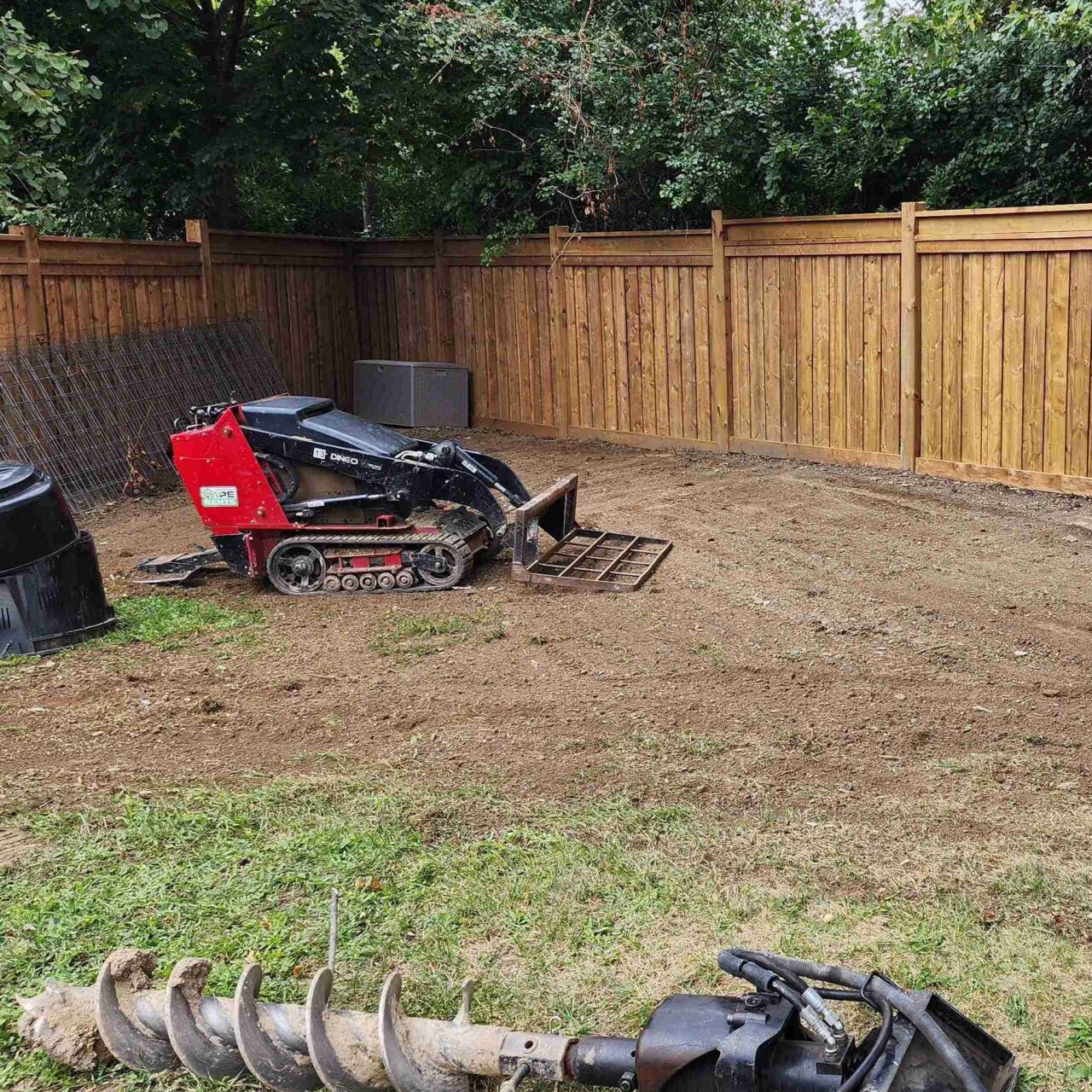
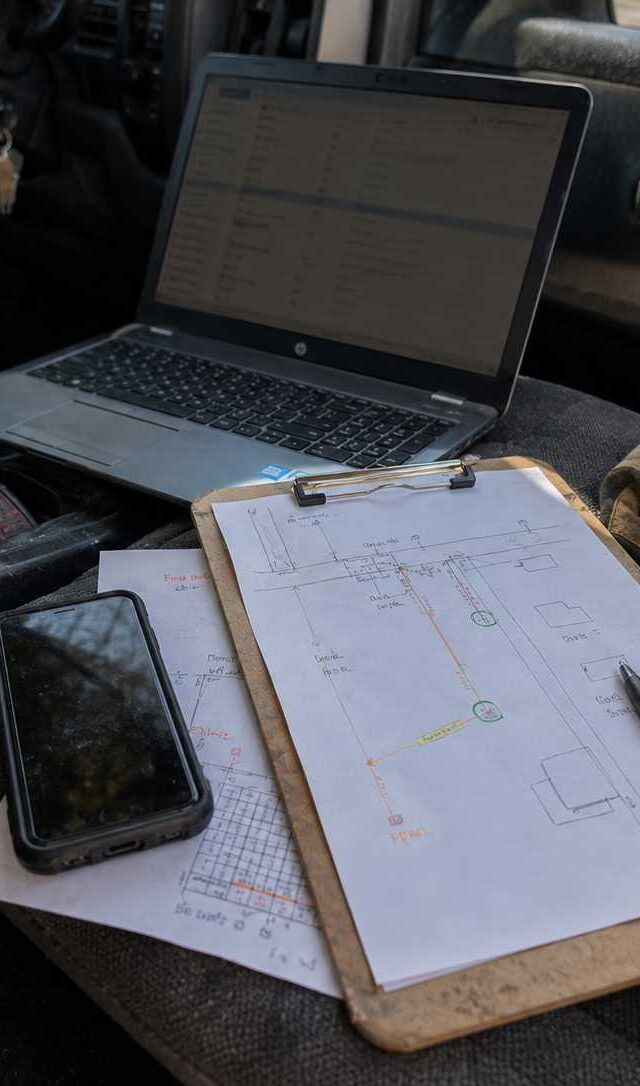
Let your contractor deal with Ontario One Call
Ontario One Call itself is only part of the process.
They receive the request and notify the appropriate infrastructure owners.
Then different utilities — or locating companies working on their behalf — respond.
That means one fence job can involve multiple responses, emails, drawings, clearances and markings.
One utility may clear the property.
Another may physically mark something.
Another response may require clarification.
Something may be late.
Something may need to be corrected.
Something on the paperwork may not match what’s painted on the lawn.
Now you’re making phone calls.
Then you’re making more phone calls.
Welcome to our world.
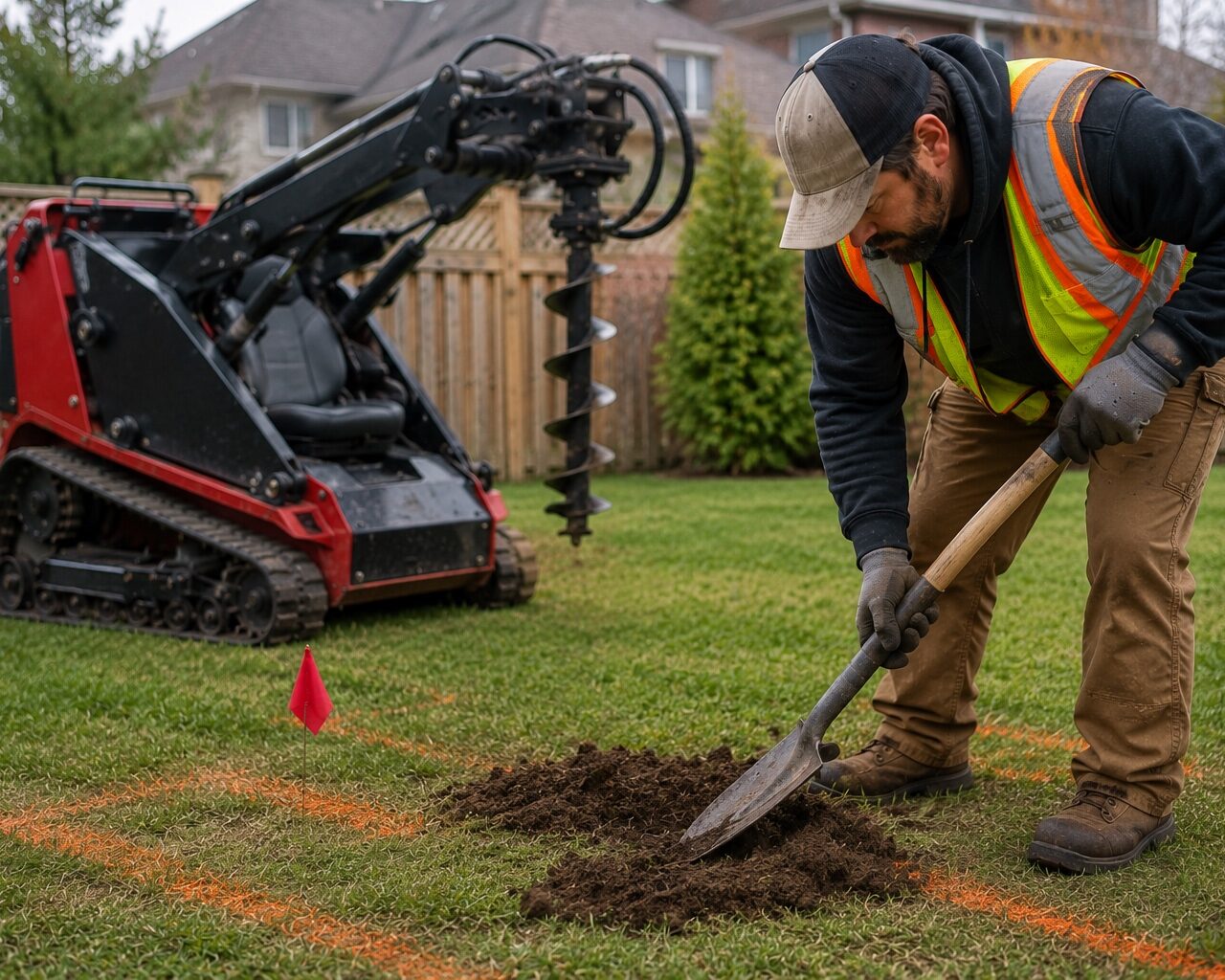
If you’ve hired a professional contractor, let us deal with it.
We have contractor accounts for a reason
A contractor who regularly excavates shouldn’t be treating every locate like the first one they’ve ever seen.
We deal with Ontario One Call and utility locating companies regularly.
We understand the paperwork.
We know what we’re looking for.
We know when something doesn’t look right.
And most importantly, we’re responsible for the excavation we’re performing.
There’s no benefit to putting the homeowner in the middle of that process.
You hired us to deal with the dirt.
Let us deal with the paperwork attached to the dirt too.
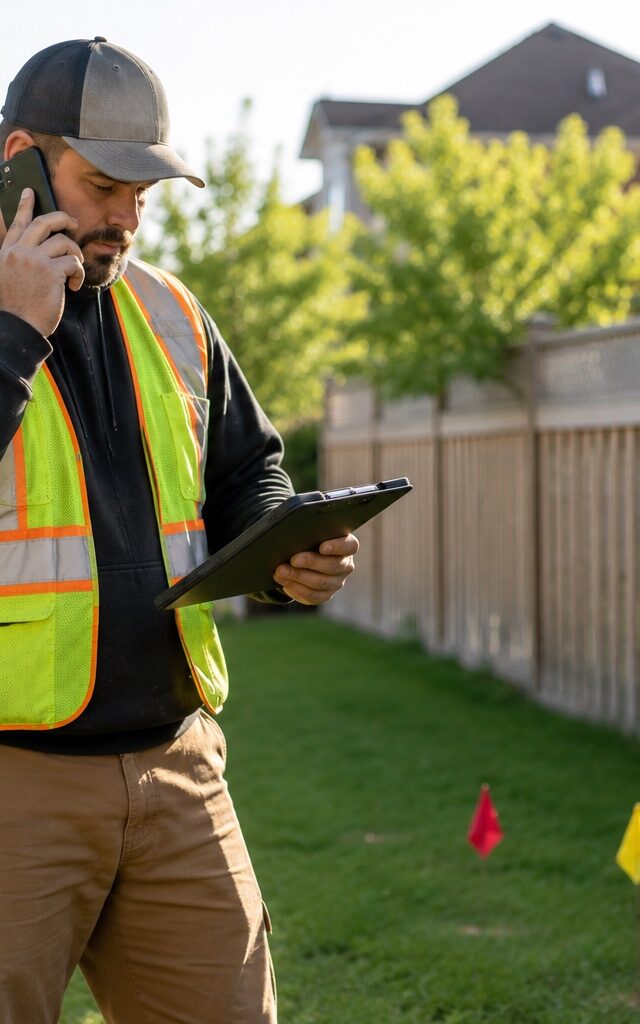
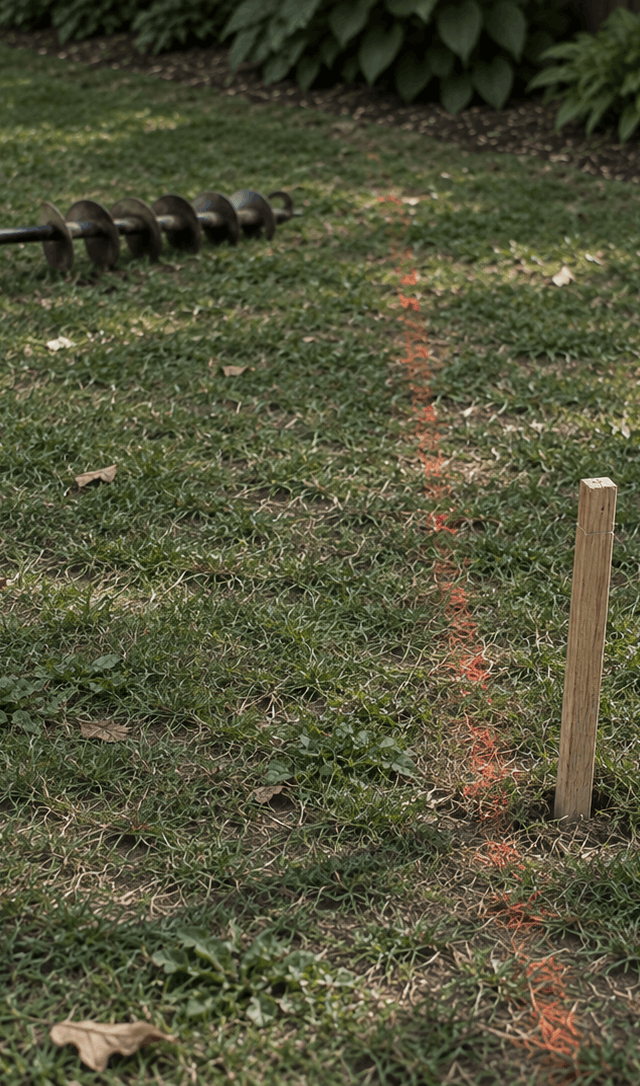
Here's another uncomfortable truth: locates aren't always accurate
Utility locating is very good.
It is not magic.
Underground infrastructure can be difficult to locate.
Records can be imperfect.
Properties can have unusual configurations.
Infrastructure can be old.
And occasionally the physical location of something underground doesn’t perfectly match what everyone expected.
Ontario One Call’s own compliance system specifically recognizes inaccurate locates as a potential compliance issue.
That’s important.
A professional contractor doesn’t look at a painted line and think:
“Perfect. Everything three inches away from this is definitely safe.”
The markings are information used to excavate safely — not permission to stop paying attention.
That's why tolerance zones matter
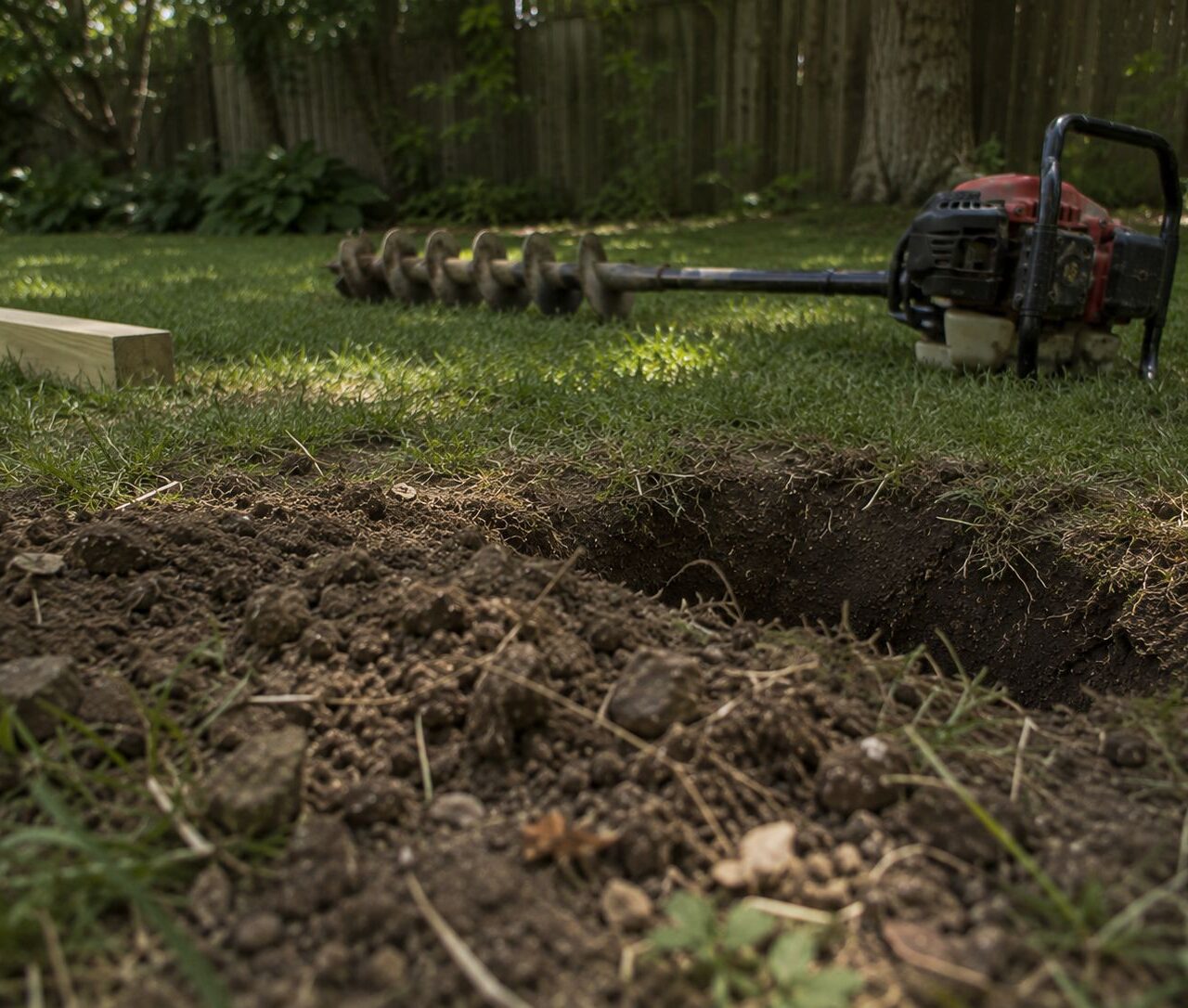
When a utility is marked close to our excavation, the way we dig changes.
For certain infrastructure — particularly gas — you cannot simply put an auger beside the paint and hope the locator had a steady hand that morning.
Mechanical excavation is restricted within the prescribed area around the utility.
That can mean hand digging.
It can mean carefully exposing the utility.
It can mean moving a proposed post.
Sometimes it means stopping altogether until something is clarified.
Yes, it slows the job down.
No, we’re not going to stick a 12-inch auger beside a gas line because someone really wants the fence post exactly there.
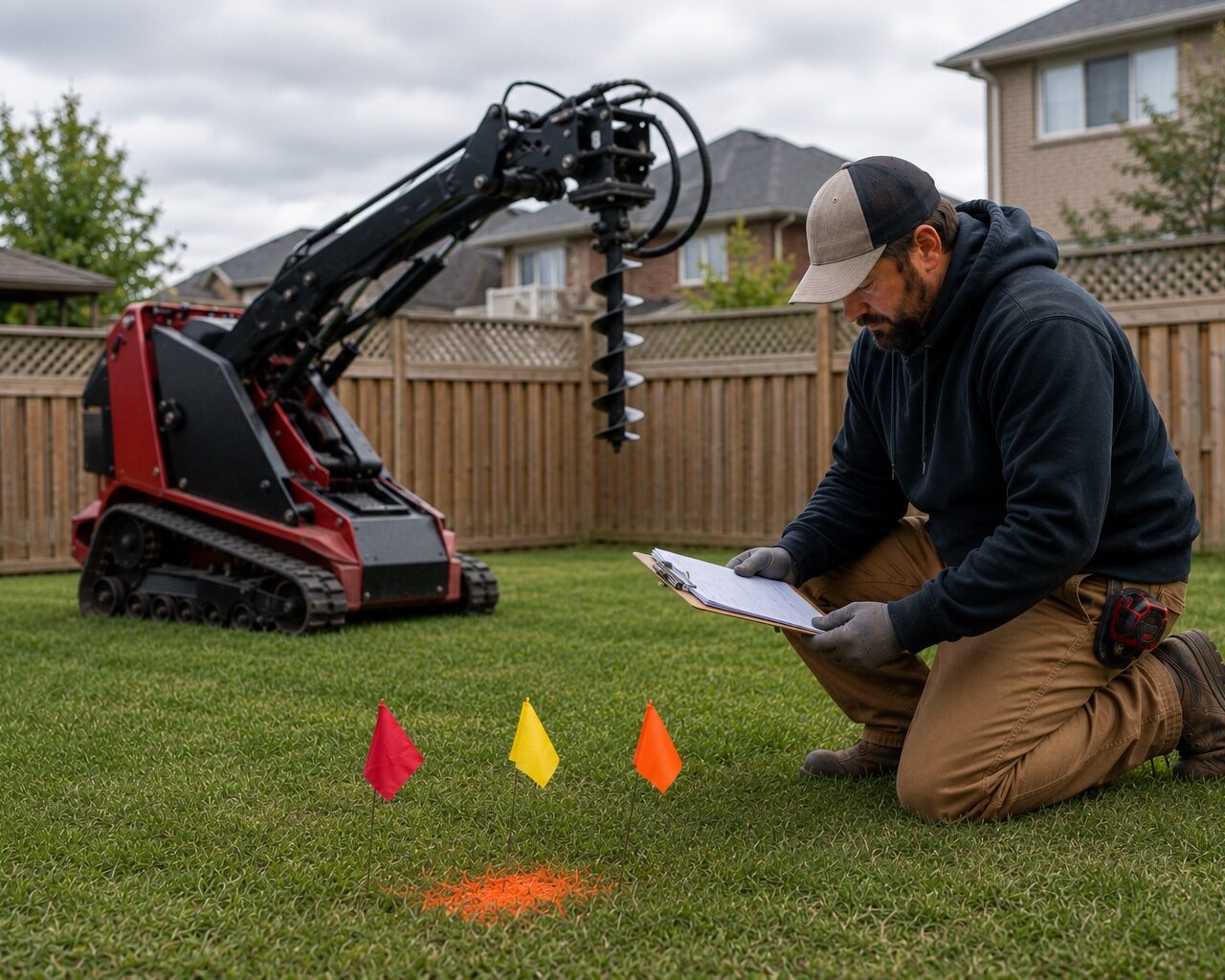
What if we find something that isn't on the locate?
We stop.
That’s the answer.
If something underground doesn’t match the locate information, continuing to dig and hoping for the best is exactly how a small problem becomes a large one.
The infrastructure needs to be identified and the situation resolved before excavation continues.
It can be frustrating.
Especially when the crew, machine and concrete are already sitting there.
But inconvenience isn’t a good reason to gamble with a gas or hydro line.
And yes — this is another reason you hire an insured contractor
Even when everyone does everything properly, excavation carries risk.
That’s why professional contractors carry insurance.
If something genuinely goes wrong, there is a business, documentation, locate history and insurance coverage behind the work.
Compare that with:
Your neighbour has an auger.
You bought him a case of beer.
He just hit something.
Good luck.
Saving a few hundred dollars suddenly doesn’t look like such a bargain.
Locates aren't an inconvenience. They're part of the job.
We understand why homeowners get frustrated with the locate process.
You finally decide to build the fence.
You’ve picked the contractor.
You’ve picked the material.
Everyone’s ready.
Then somebody says:
“We’re waiting on locates.”
It feels like bureaucracy standing between you and your new fence.
But from our side, locates aren’t separate from installing the fence.
They’re part of installing the fence properly.
Just like drilling deep enough.
Just like using enough concrete.
Just like setting the posts straight.
The difference is that a crooked post looks bad.
Drilling through the wrong thing underground can be a whole lot worse.
Our rule is pretty simple
If Post2Fence is doing the digging, we want the locates.
We request them.
We review them.
We make sure the work area is covered.
We follow the markings.
And if something doesn’t make sense, we stop and figure it out before putting the machine in the ground.
It might add some time before your project starts.
But we’d rather explain why your fence was delayed for a locate…
than explain to you, the utility company and the fire department why there’s a giant hole in your backyard.
Know what’s below before you dig.
Your fence will still be there tomorrow.
The gas line should be too.