
The Hidden Costs of Building a Fence
OVERVIEW
On paper, building your own fence looks simple.
Posts, boards, concrete.
How hard could it be?
Then two weekends turn into four, your buddy stops answering your texts, and you’re pretty sure you clipped something important with the auger.
We see this all the time. Homeowners don’t usually underestimate the price of a fence — they underestimate the hidden costs that don’t show up on the receipt.
Here are the big ones people don’t think about until it’s too late.
Not doing utility locates (and hitting something expensive)
This is the big one. And yes, it happens more often than you’d think.
Skipping utility locates to “save time” is like skipping insurance because you’ve never crashed before. When you hit a gas line, electrical conduit, or communication line, the fence instantly becomes the cheapest part of your problem.
Best case:
- you lose half a day
- you make a few phone calls
- everyone’s annoyed
Worst case:
- emergency crews
- repair bills
- neighbours asking uncomfortable questions
Utility locates are free. Repairs are not.
Not valuing your own time
This one doesn’t feel like a cost — until you actually do the math.
Let’s say the fence takes:
- 3–4 full weekends
- evenings after work
- coordinating help
- fixing mistakes
- redoing things that didn’t line up
Even if you don’t put a dollar value on your time, there is a cost:
- missed plans
- sore backs
- frustration
- projects dragging on forever
There’s a big difference between “I enjoy working on my house” and “I’ve been staring at half a fence for a month.”
Equipment rental costs and learning on the fly
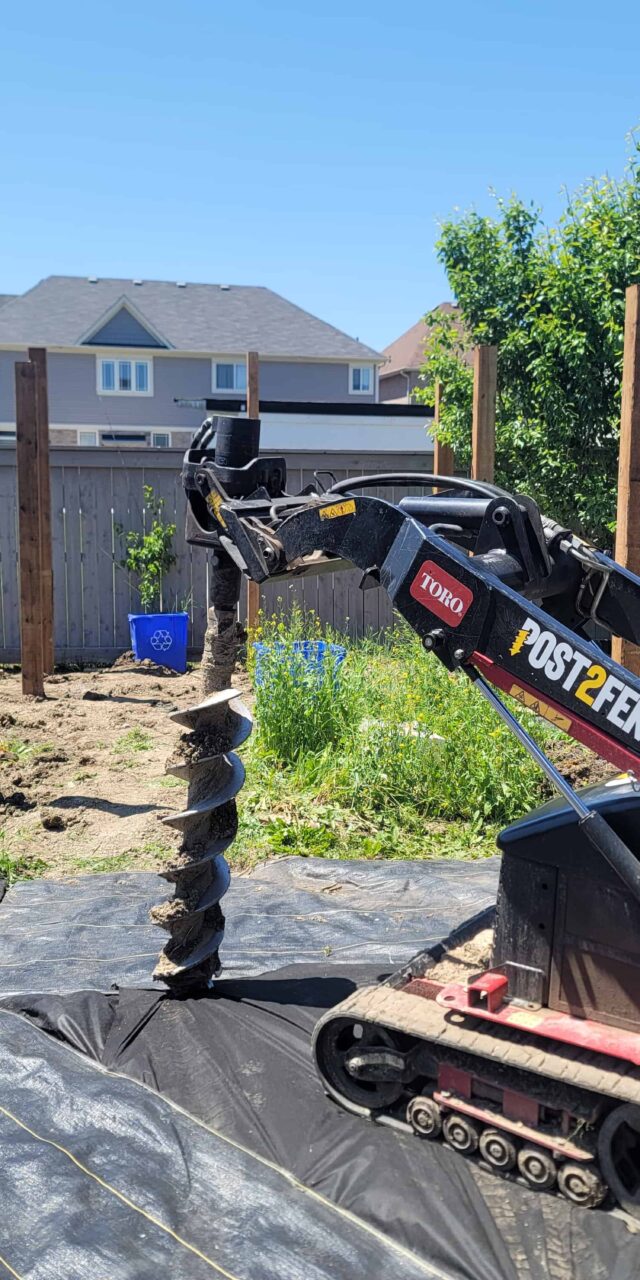
Post hole augers, skid steers, compact loaders — none of this is free.
Rental costs add up quickly, especially when:
- the soil is harder than expected
- you hit rock
- you need the machine for “just one more day”
And unlike pros, homeowners are learning as they go. What takes us a few hours can easily stretch into days when you’re figuring it out in real time.
Moving and disposing of dirt
Nobody thinks about the dirt.
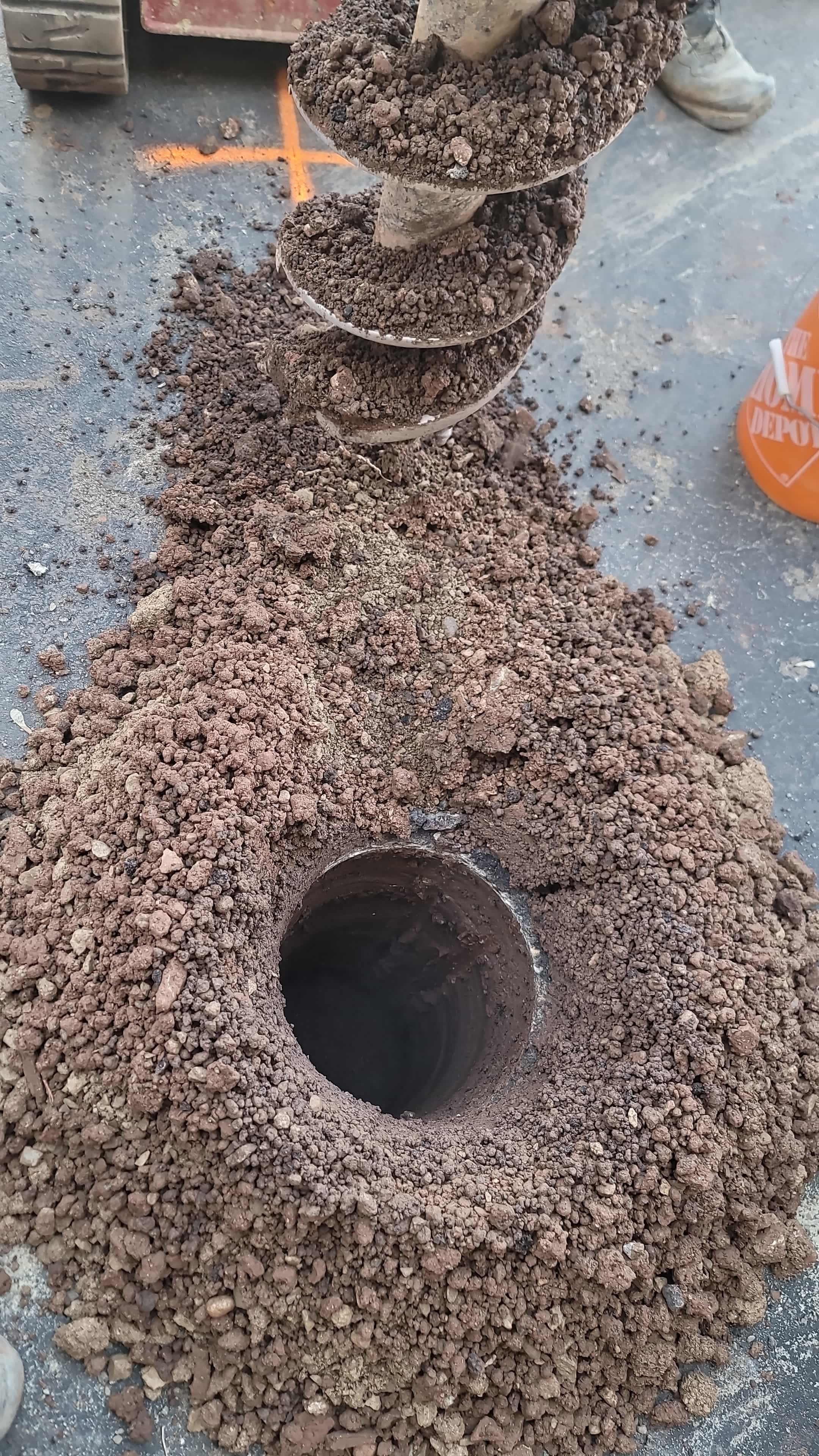
Every hole you drill produces a surprising amount of it. Multiply that by a full fence line and suddenly you’ve got piles everywhere.
Now you need to:
- move it
- store it
- spread it
- dispose of it
And if the access is tight? Enjoy moving dirt one wheelbarrow at a time.
The value of getting it done in 1–2 days instead of 4 weekends
This one isn’t on a receipt, but it matters.
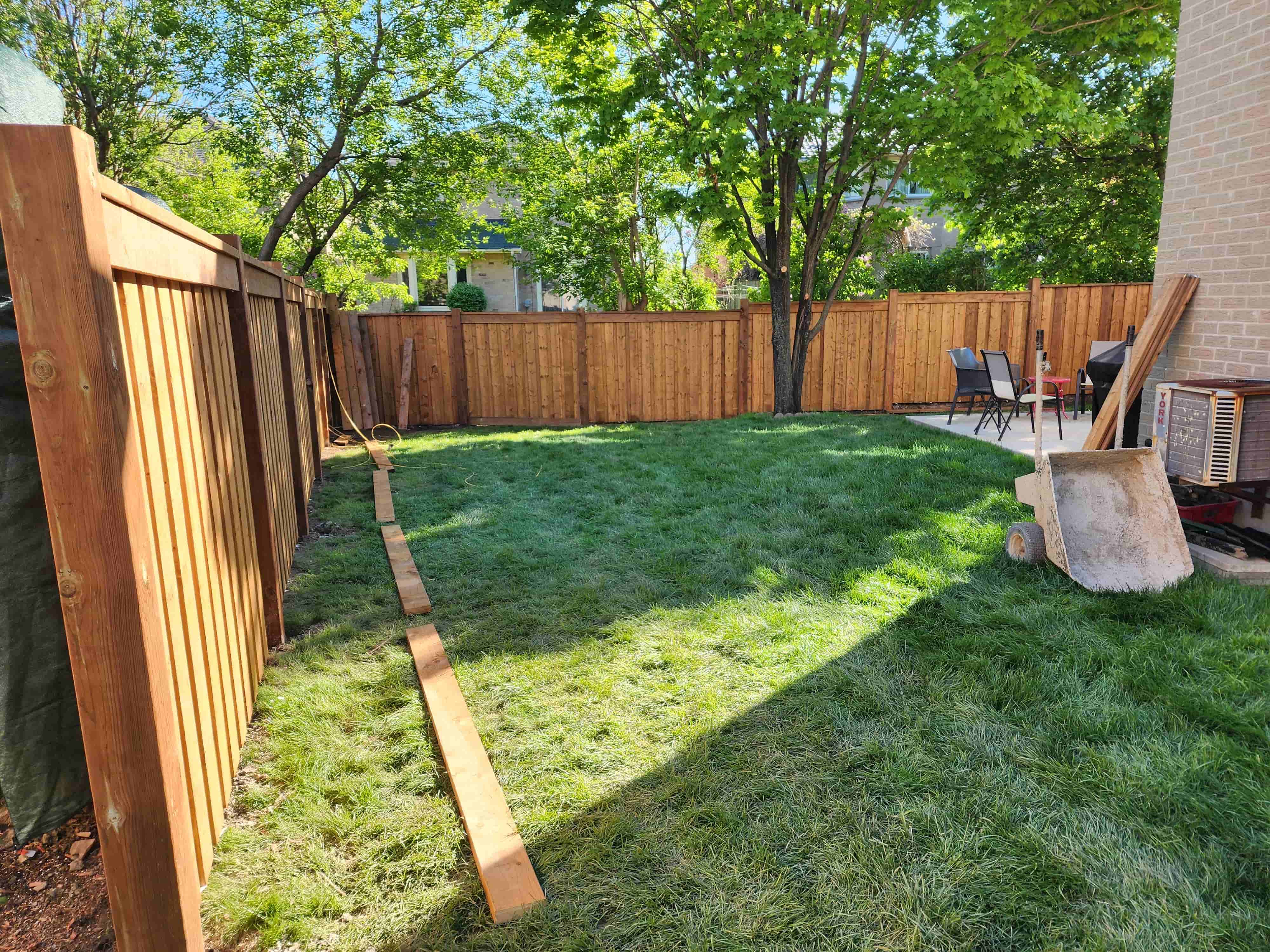
A fence built in a day or two:
- doesn’t sit half-finished
- doesn’t get rained on mid-install
- doesn’t become a permanent “I’ll finish it next weekend” project
Most DIY fences don’t fail because people are lazy — they fail because life gets in the way.
Momentum matters.
Owing your friends “a favour”
We’ve all done it.
“Hey man, can you help me set posts on Saturday?”
At first it’s pizza and beer. Then it’s:
- multiple weekends
- heavy lifting
- waiting around
- frustration when things don’t go smoothly
Eventually that “free help” turns into:
- dinners
- favors
- helping them move
- or awkward silence when they stop replying
Those favours have a cost. It just doesn’t show up right away.
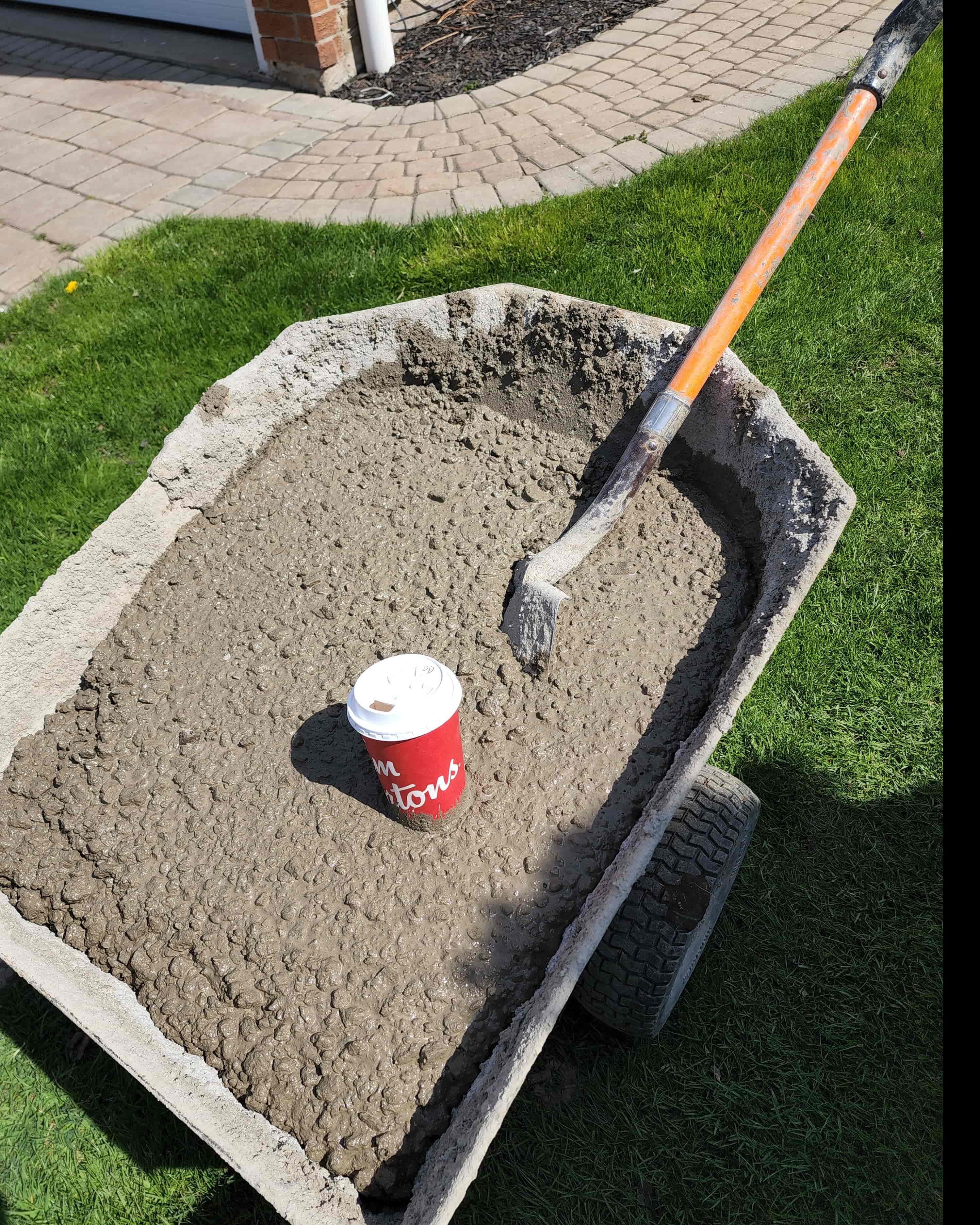
Concrete costs (this one surprises people)
Most homeowners buy concrete by the bag. It’s convenient, but it’s expensive.
- buy cement in bulk
- use recycled concrete
- mix exactly what’s needed
- waste far less material
Bagged concrete adds up fast, especially when:
- holes are deeper or wider than expected
- soil conditions change
- you overbuy “just in case”
It’s one of those things that quietly blows the budget without anyone noticing until the receipt pile grows.
So… is DIY fencing a bad idea?
Not at all.
If you:
- enjoy the process
- have the time
- have help
- accept that it may take longer and cost more than expected
DIY can be rewarding.
But if you’re comparing prices, make sure you’re comparing the full picture, not just lumber and posts.
Because the hidden costs are usually what surprise people — not the fence itself.