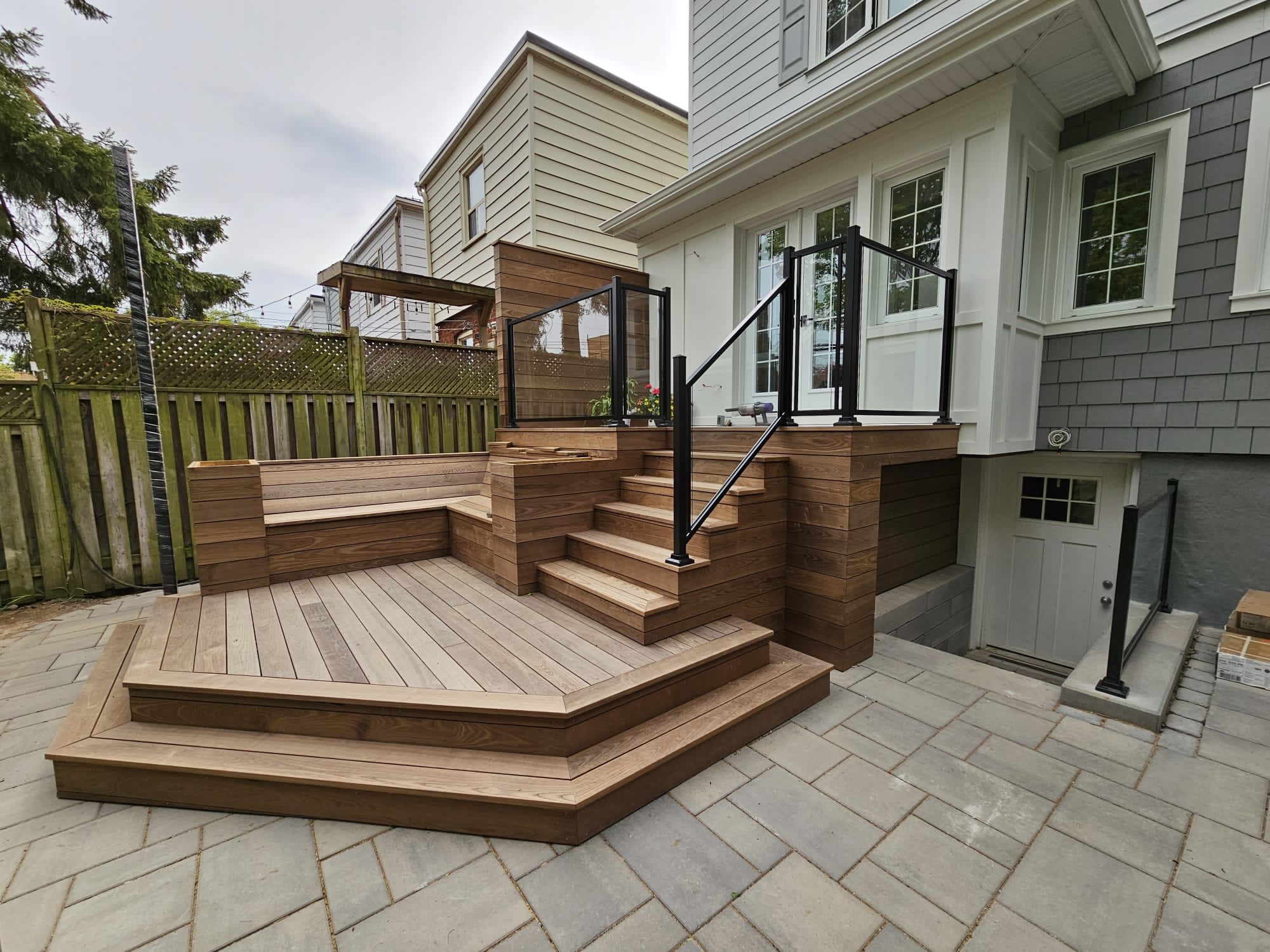

Composite vs Pressure-Treated Decking
OVERVIEW
This question comes up on almost every deck project.
“Should I go composite… or just do pressure-treated and save the money?”
The honest answer is the same one we keep coming back to with decks and fences:
It depends on how you use the space, how long you plan to keep it, and how much maintenance you’re willing to live with.
There isn’t a wrong choice — but there are very different tradeoffs.
Pressure-treated decking: cheaper up front, more work forever
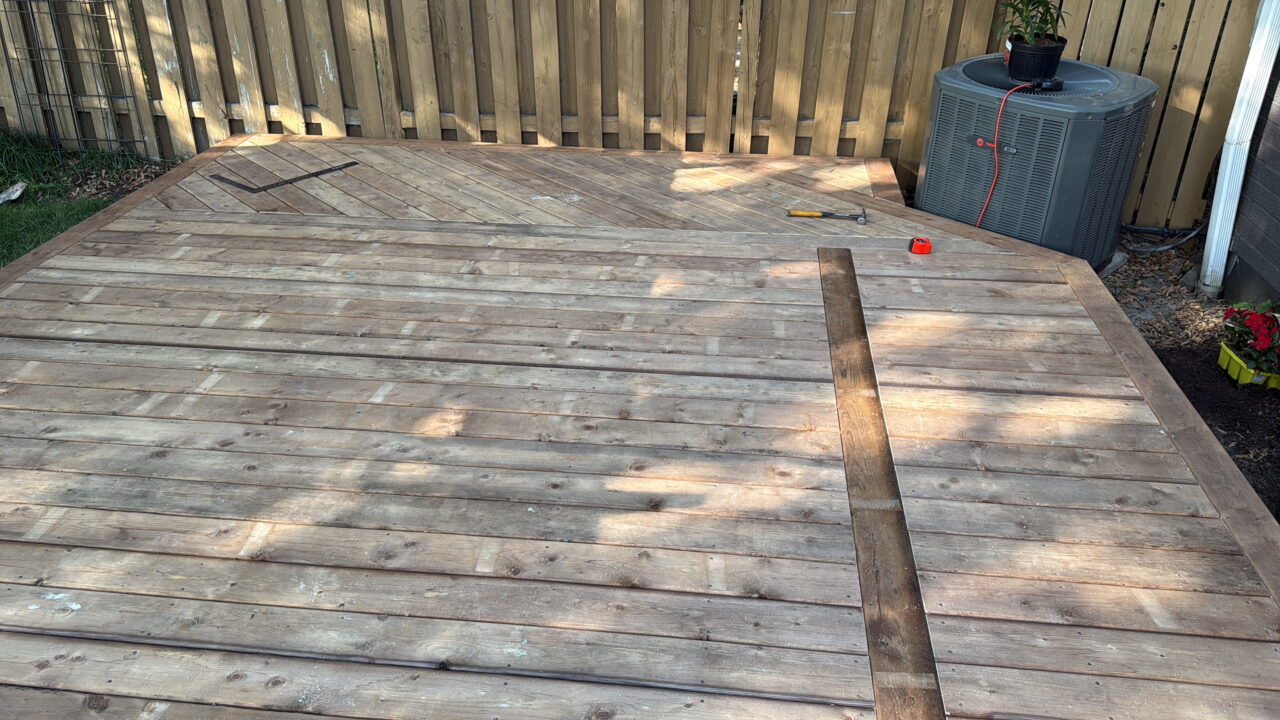
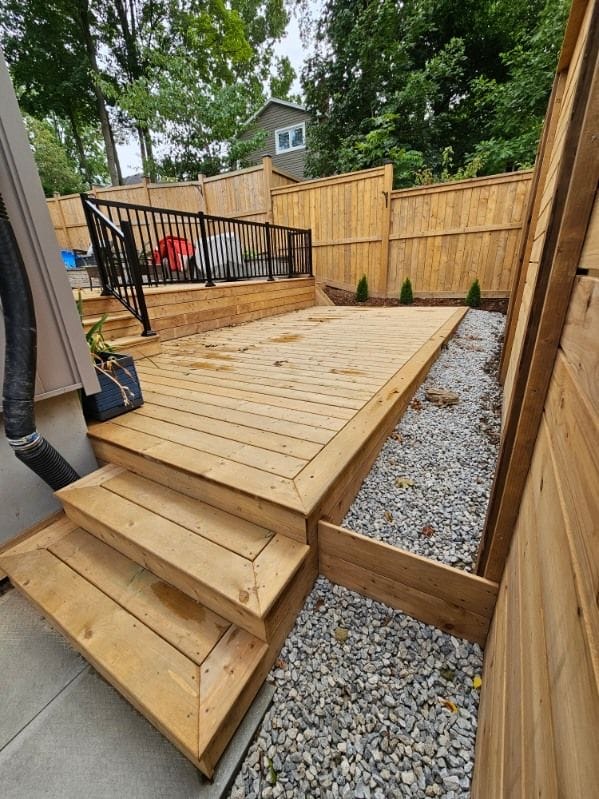
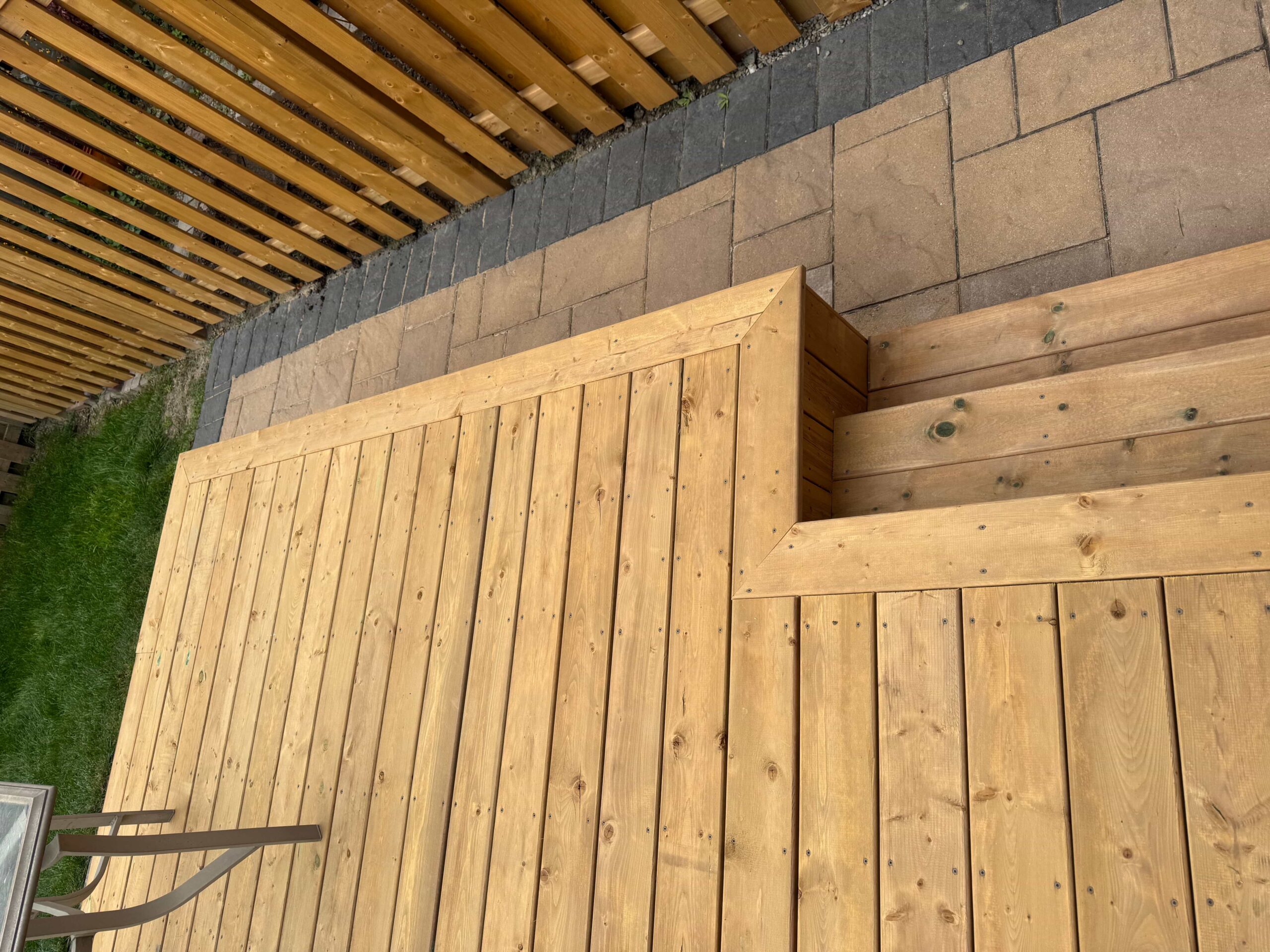
Pressure-treated lumber is popular because it’s familiar and affordable. At the time of writing this, pressure-treated deck boards are roughly $1.20 per linear foot, which makes them hard to beat from an upfront cost perspective.
They work. They look fine. And for a lot of people, that’s enough.
The downside is maintenance. Pressure-treated boards will:
- warp
- cup
- splinter
- fade
Staining helps, but it doesn’t stop the aging process — it just slows it down. You’ll still be cleaning, sanding, and restaining every few years if you want the deck to look decent. Color options are also limited, and even the nicest stain eventually turns into “weathered brownish-grey.”
If you don’t mind the work, pressure-treated can be a perfectly reasonable choice.
Composite decking: expensive, but low drama
It:
- lasts much longer
- doesn’t warp or splinter
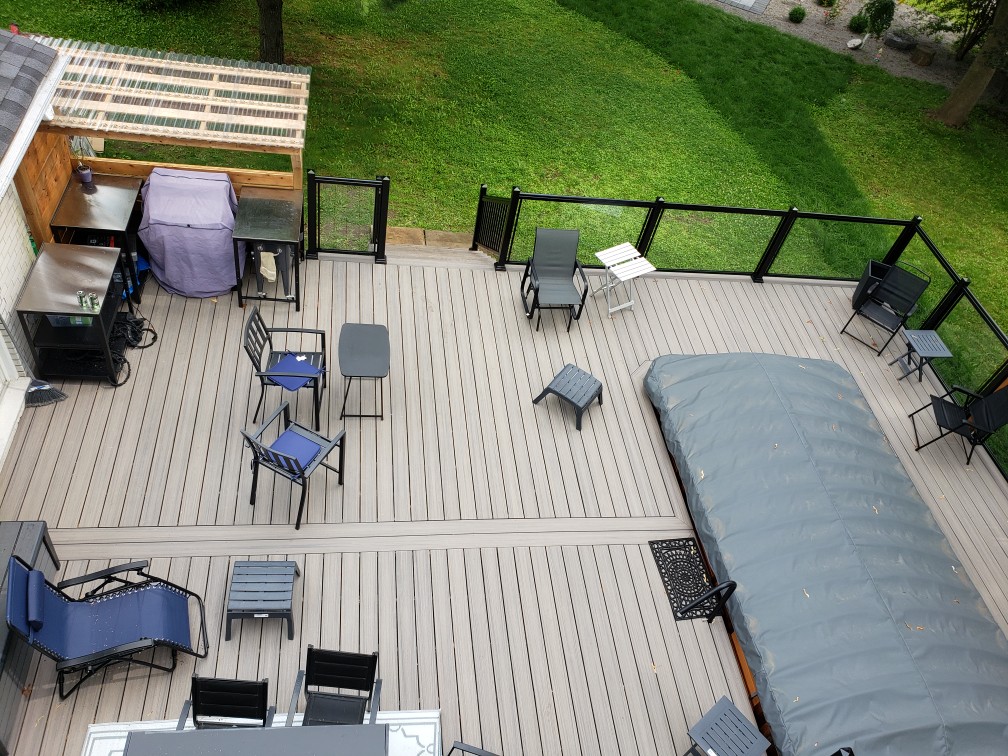
- comes in a huge range of colours and finishes
- looks basically the same years later
If the deck framing is done properly, a composite deck can look just as good in 20 years as it did the day it was built.
But yes — it costs more. A lot more.
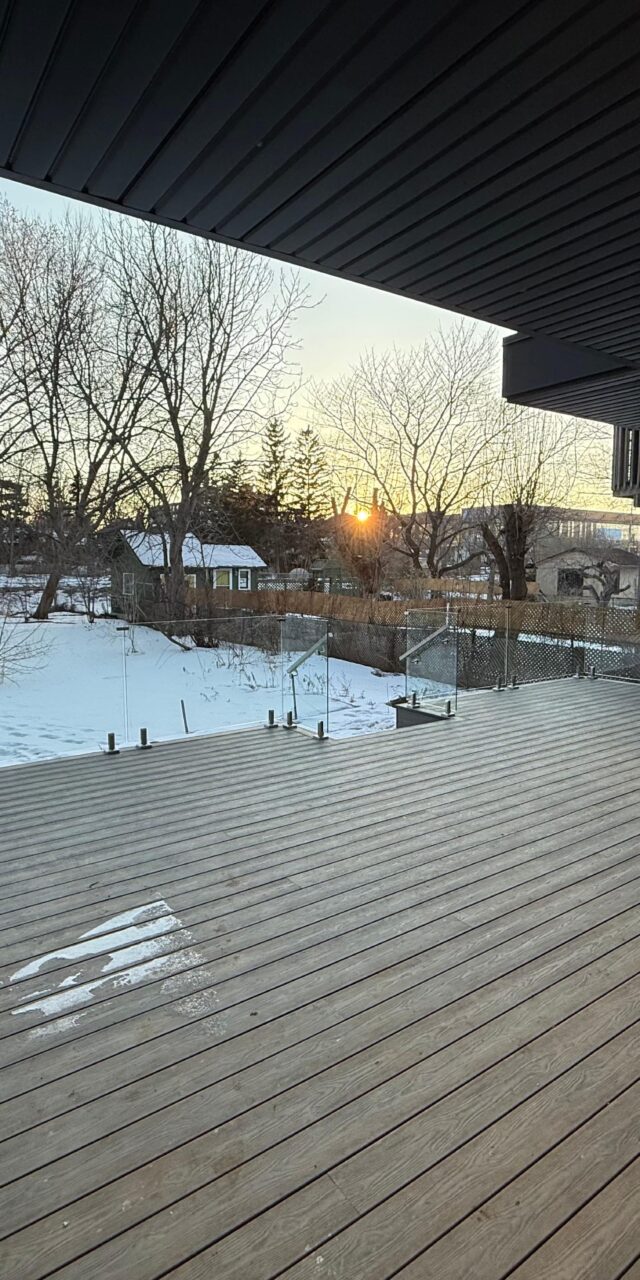
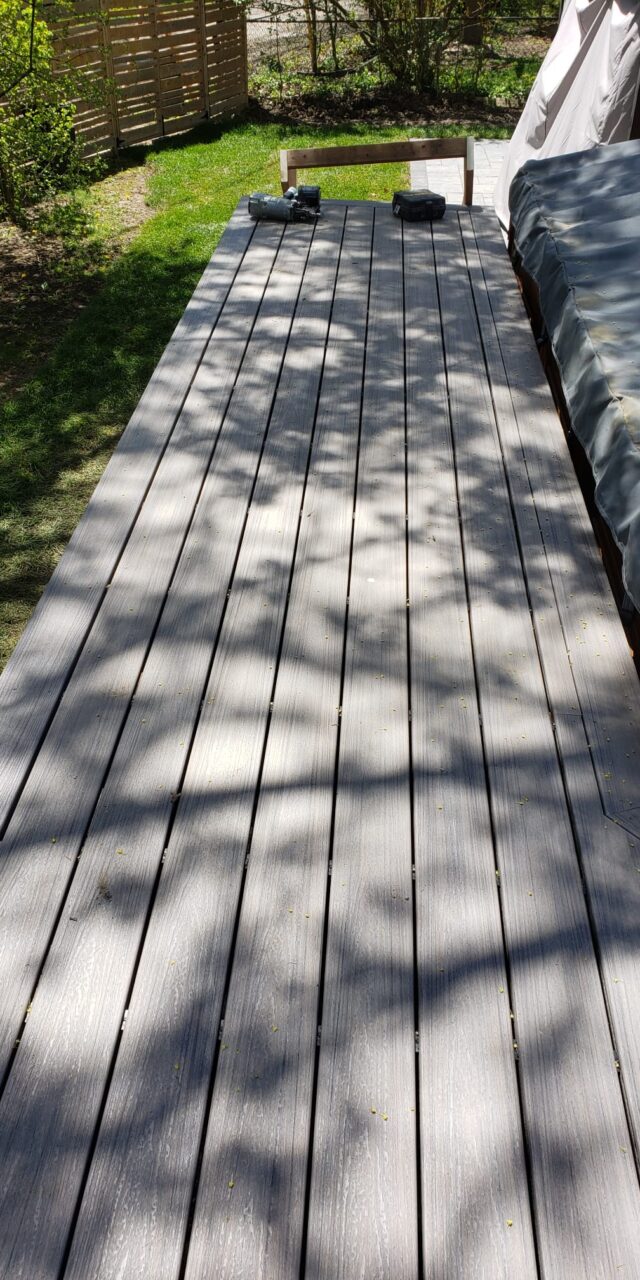
Composite boards typically range from $4 to $9 per linear foot, and that’s just the boards. The fasteners are also significantly more expensive, since most composite systems use hidden fastening systems instead of screws through the face.
On top of that, composite boards are heavier and usually require closer joist spacing, which means more framing lumber, more labour, and higher costs below the surface.
Where composite costs really start to snowball
Once you decide you want:
- composite skirting
- composite stair treads
- modern, clean finishes
…the price can escalate very quickly.
Matching stairs and skirting looks great, but those details are often where budgets quietly explode.
The downside nobody mentions enough: heat
Composite decking gets hot in direct sun.
Hot enough to burn bare feet on a summer day.
Lighter colours help, but it’s still something to consider if:
- your deck gets full sun
- kids or pets use the space
- you like walking outside barefoot
Pressure-treated wood stays much cooler underfoot.
So why would anyone choose composite?
If you’re someone who:
- uses the deck constantly
- wants it to look good without work
- doesn’t want splinters
- doesn’t want to stain or maintain
- plans to be in the house long-term
Composite starts to make a lot of sense.
You’re trading upfront cost for:
- zero maintenance
- long-term appearance
- peace of mind
And for many homeowners, that’s worth it.
The honest conclusion
Pressure-treated decks are cheaper to build, but more expensive to maintain — in time, effort, and eventual repairs.
Composite decks are expensive upfront, but easy to live with long-term.
If money were no object, composite is almost always the better choice.
But money is an object for most people, and that’s okay. A well-built pressure-treated deck can still be a great space if you understand what you’re signing up for.
As with everything in deck building, the key isn’t picking the “best” material — it’s picking the one that fits your lifestyle, not just your budget.