

Deck Footings vs Helical Piles
OVERVIEW
This is one of those questions where people really want a straight answer.
So here it is:
Neither deck footings nor helical piles are “better.”
They’re just better for different situations.
Anyone telling you one option is always superior is either oversimplifying… or selling you something.
Let’s start with the obvious difference: cost
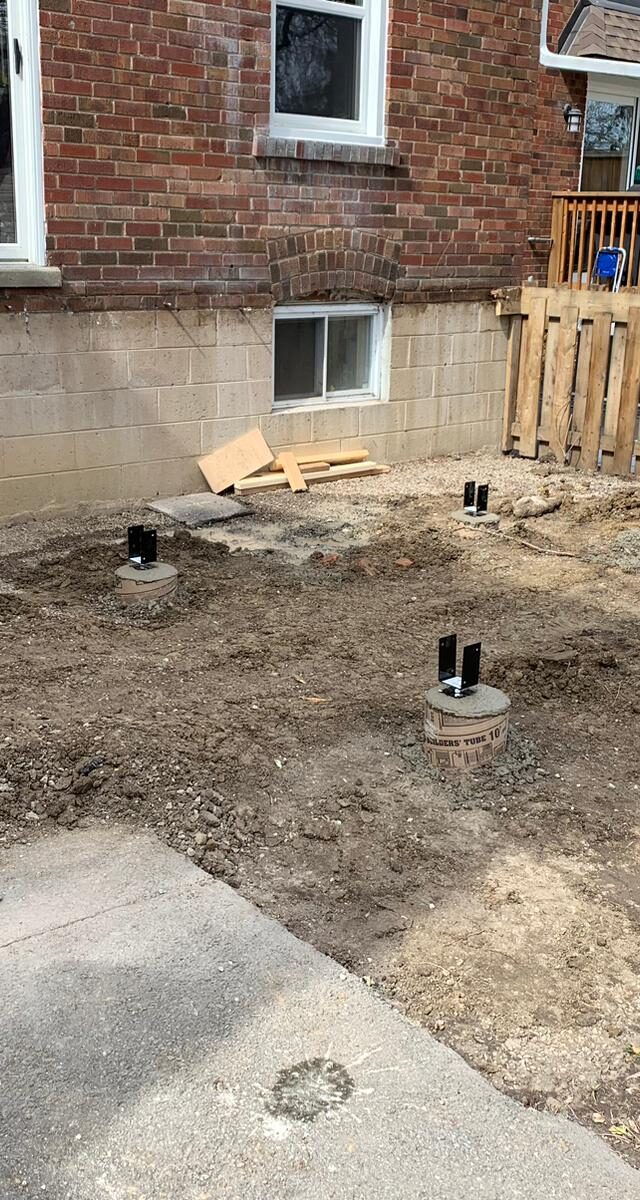
In most cases, helical piles cost significantly more than traditional concrete footings. Depending on the project, piles can be three to five times more expensive than footings.
That alone makes footings the default choice for many decks — and for good reason. When soil conditions are decent and access is reasonable, concrete footings are cost-effective, reliable, and well understood.
But cost isn’t the whole story, and sometimes the “cheaper” option on paper becomes the more expensive one once reality kicks in.
Where helical piles start to make sense
Helical piles really shine in poor soil conditions.
In sandy, swampy, or waterlogged areas, a concrete footing may:
- not be able to go deep enough
- require an excessively wide diameter
- become unstable or impractical
At that point, the footing needs to be so large that:
- excavation costs skyrocket
- concrete usage increases dramatically
- installation becomes slow and messy
In these situations, a helical pile — even at a higher upfront cost — can actually be the smarter and sometimes cheaper solution.
How each system actually works
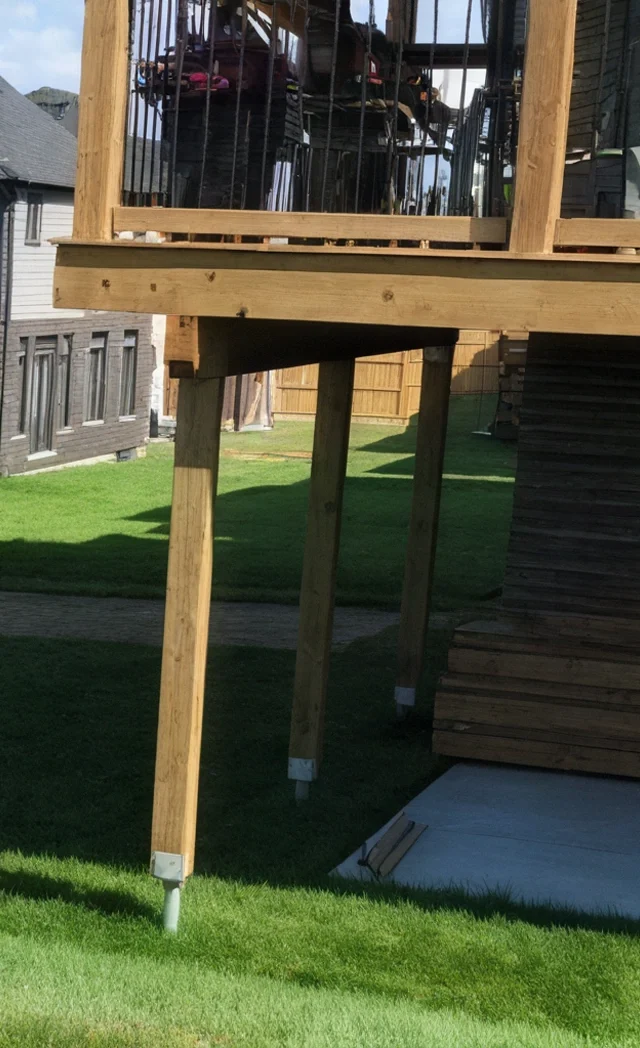
Helical piles are installed until they reach a specific torque rating. That torque corresponds to how much load the pile can safely support, based on engineered requirements. Once the target torque is achieved, you know the pile has reached competent soil.
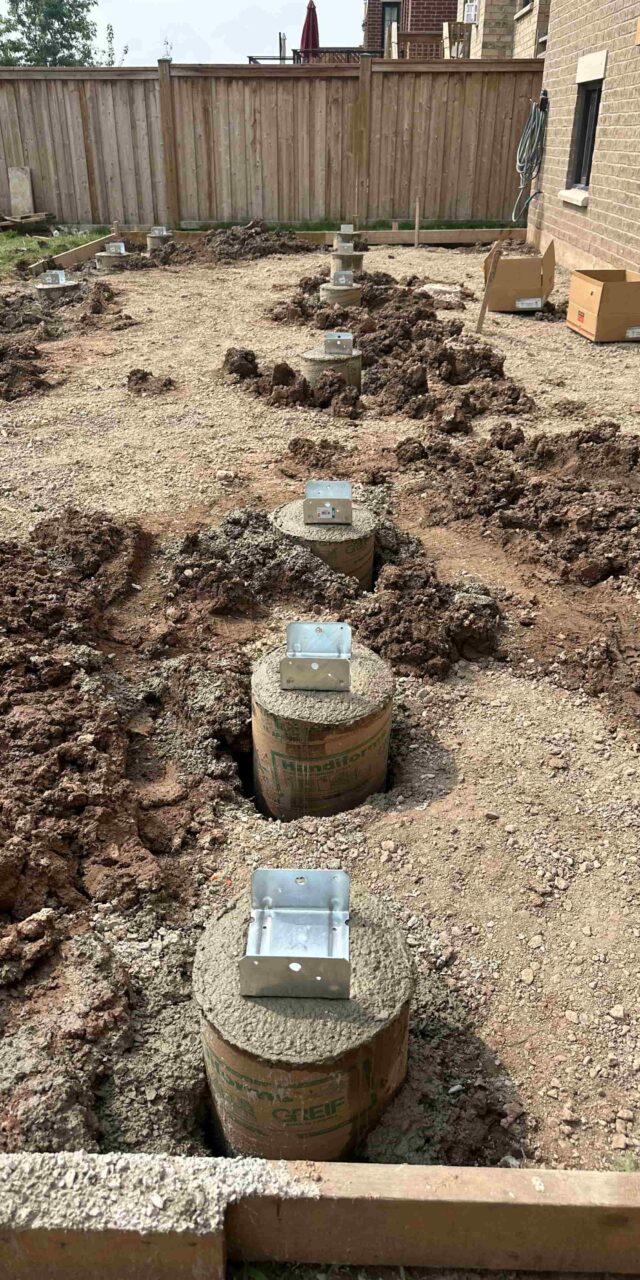
Concrete footings work differently. Their load capacity depends on the compressive resistance of the soil, which is measured in PSI. That resistance determines how wide the footing needs to be to safely support the deck.
Both systems require engineered specifications.
Neither should be guessed.
Neither should be estimated on site with “this looks good.”
If someone is eyeballing footing sizes or pile depth without engineering, that’s a red flag.
When concrete footings are usually the better choice
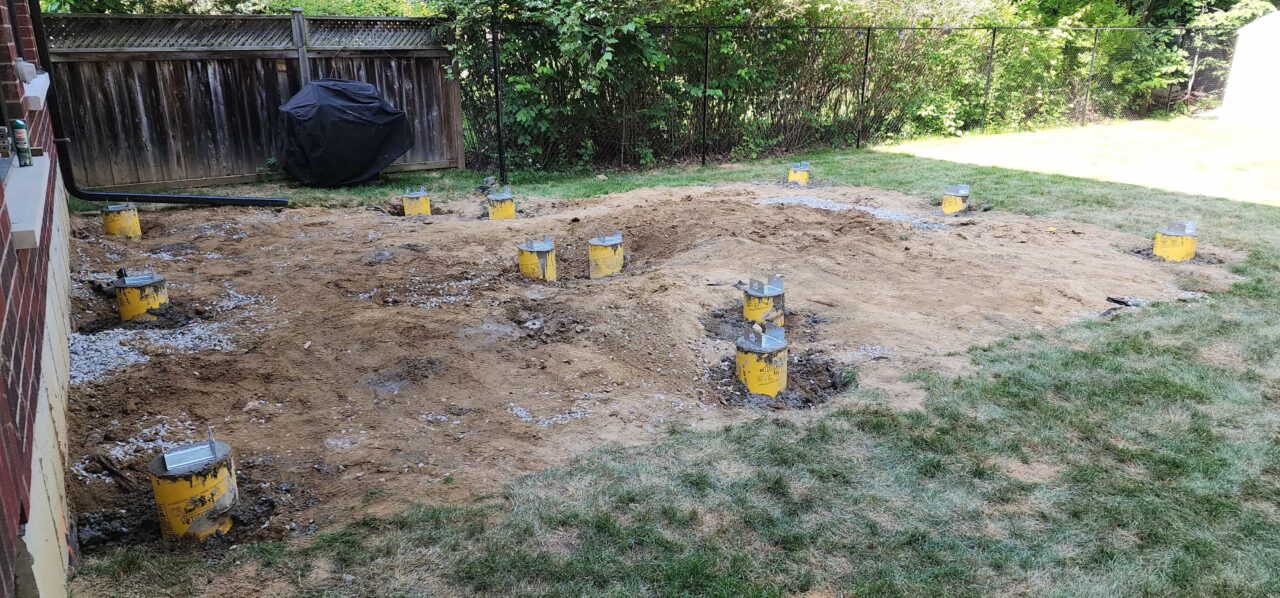
If your project requires multiple smaller footings — typically around 12 inches in diameter or less — concrete footings are almost always the most economical option.
Once you get into:
- six footings or more
- reasonable soil conditions
- accessible drilling locations
…footings are hard to beat from a cost standpoint.
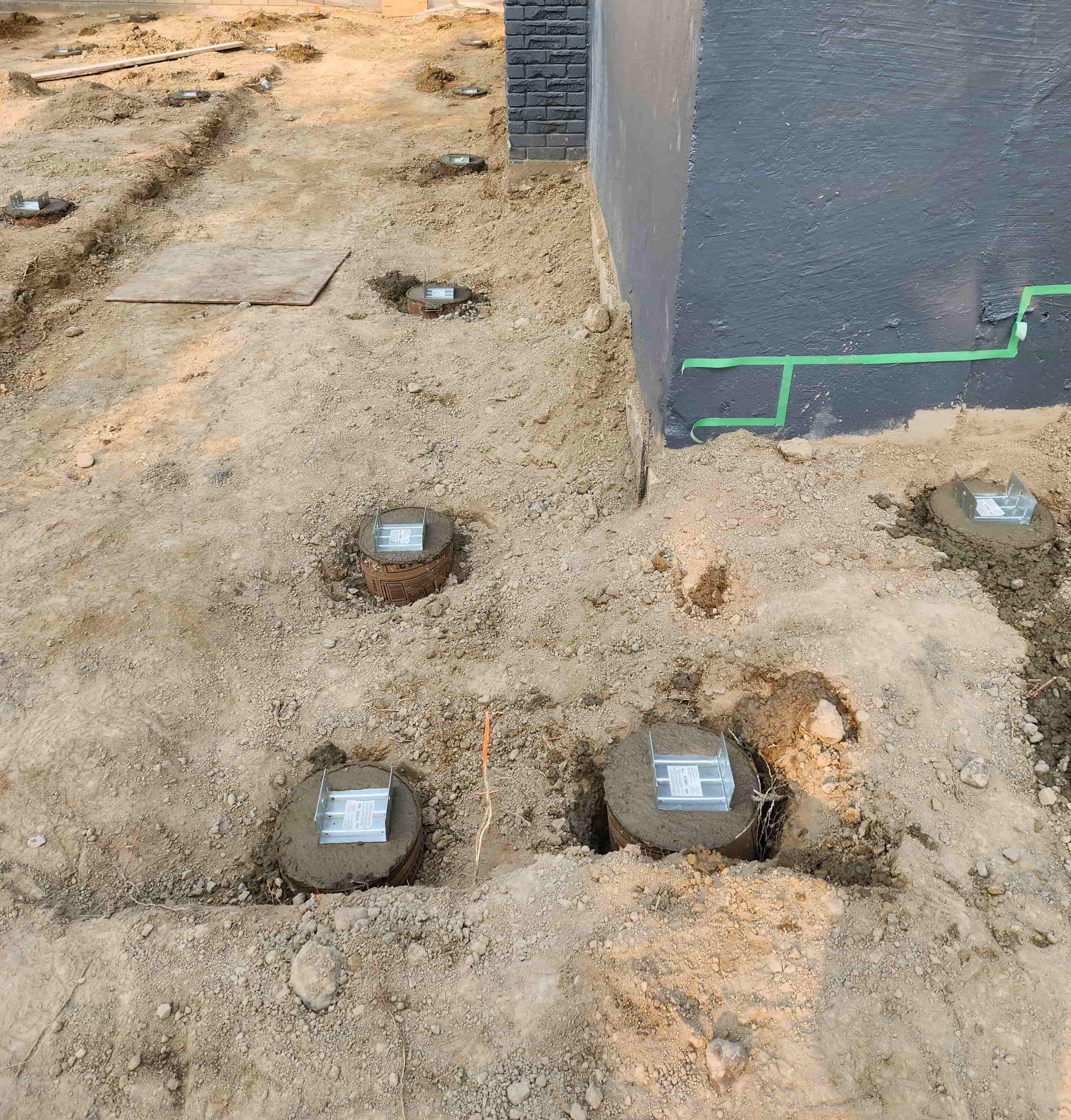
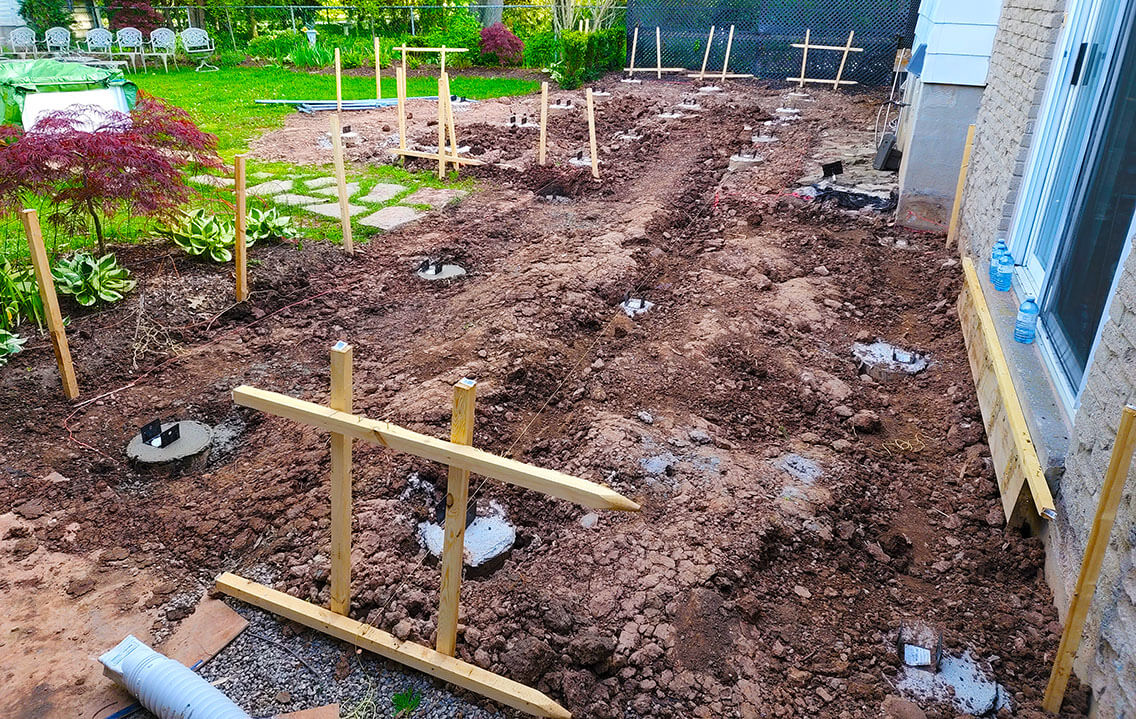
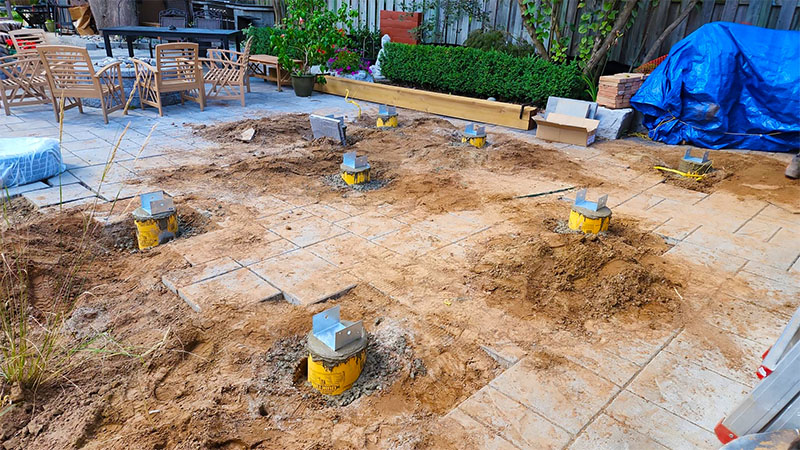
The tradeoff is time and effort. Concrete needs time to cure before you can build, and drilling footings means dealing with a lot of dirt. That dirt has to be moved, stored, or disposed of, which adds labour and mess.
Where helical piles really win
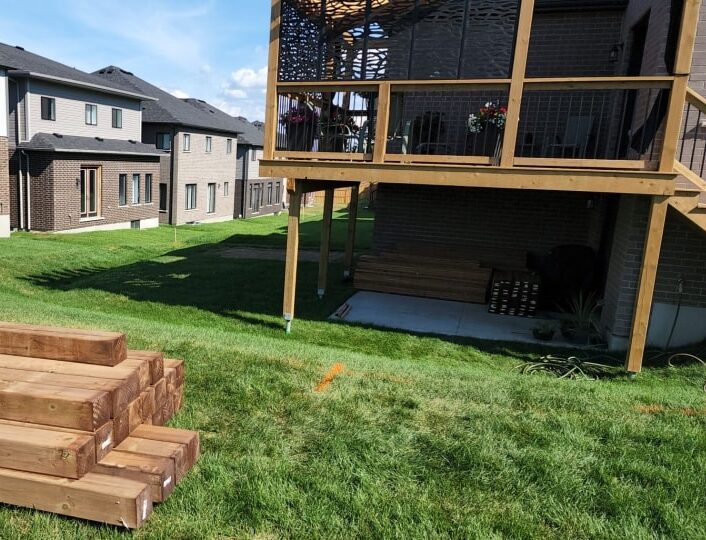
First, there’s no waiting. Once piles are installed, you can start building immediately. No cure time, no scheduling around concrete.
Second, there’s no dirt. No piles of soil in the yard, no wheelbarrows, no cleanup headaches.
For tight access areas, difficult soil, or projects where time matters, that convenience can be worth the higher price.
So… which one should you choose?
It really comes down to:
- soil conditions
- access
- number of supports required
- budget
- timeline
Concrete footings are usually the best value when conditions are right. Helical piles are often the better choice when conditions aren’t.
Neither option is wrong.
The mistake is choosing one without understanding why.
The real takeaway
The goal isn’t to pick the “best” system.
The goal is to pick the system that makes sense for your yard.
A properly designed footing will last decades.
A properly installed helical pile will too.
The problems only start when people try to force the wrong solution into the wrong conditions.
If you’re unsure which direction makes sense for your project, that’s not a failure — it’s exactly when asking questions saves you money and headaches later.