
Choosing Framing Material for a Deck
OVERVIEW
When people think about building a deck, they usually jump straight to the fun stuff — deck boards, railings, colours. The framing almost always gets treated as a boring technical detail that someone else will “figure out.”
That’s a mistake.
The framing is the deck. If the framing is wrong, nothing else really matters.
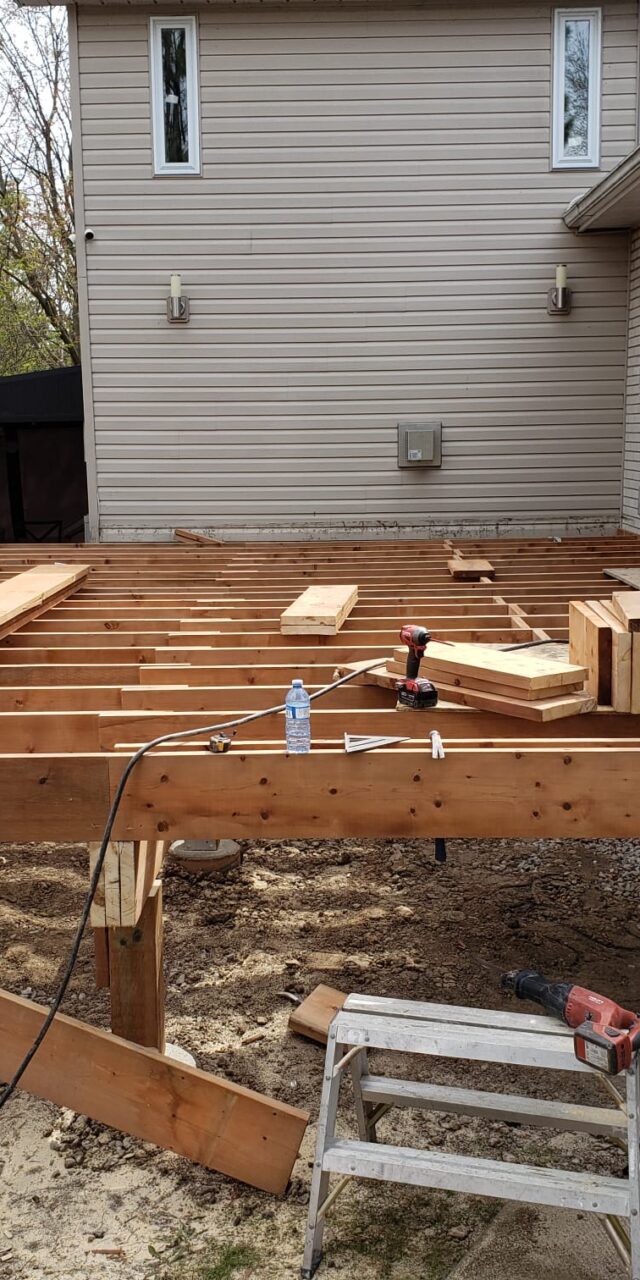
How deck framing actually works
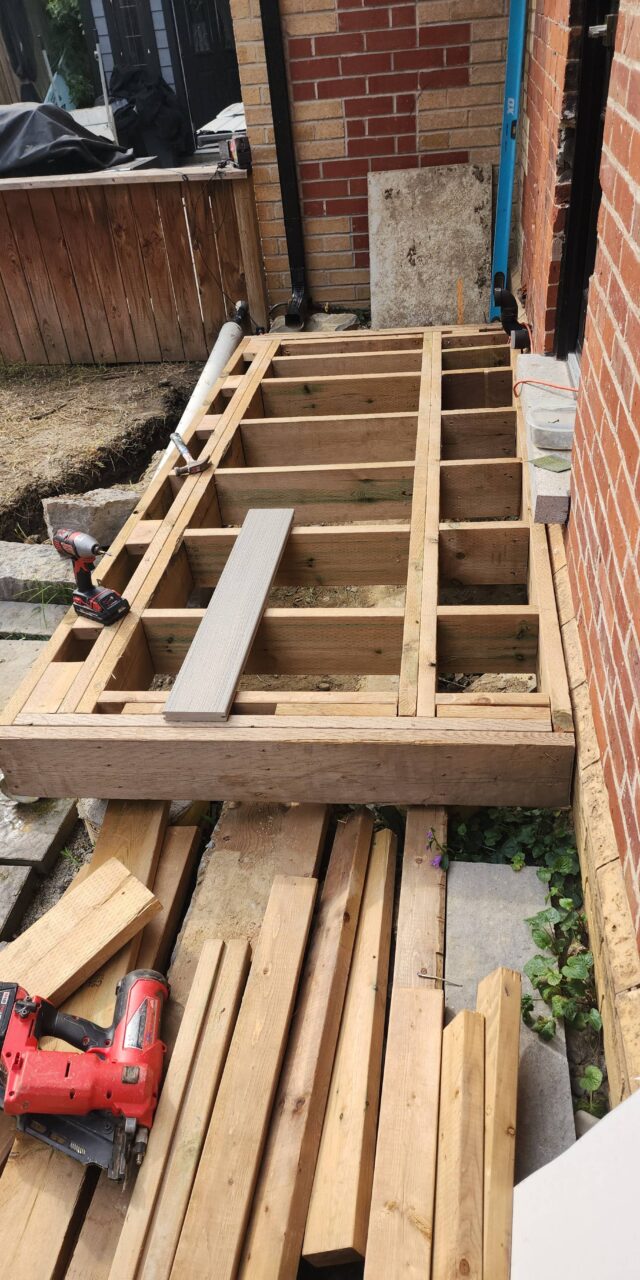
Before talking materials, it helps to understand how everything is stacked.
- Your posts sit on top of your footings or helical piles.
- Your beams sit on top of the posts.
- Your joists run perpendicular to the beams.
- Your deck boards run perpendicular to the joists, in the same direction as the beams.
Once you picture that layout, it becomes clear why changing one piece of the framing affects everything else.
The materials you’re actually choosing between
When framing a deck, you’re really making decisions about three things: post size, beam size, and joist size.
Posts are almost always 4×4 or 6×6, with 6×6 being the most common choice on modern decks. Beams are typically built from 2×8, 2×10, or 2×12 lumber, and almost always doubled up into a double beam. On larger decks, beams are sometimes tripled. Joists are usually 2×8 or 2×10, depending on span, spacing, and what type of decking will sit on top.
None of these choices are automatically right or wrong. Just like asking whether footings are better than helical piles, the honest answer is always the same: it depends.
Bigger framing doesn’t always mean fewer problems
Here’s where people get tripped up.
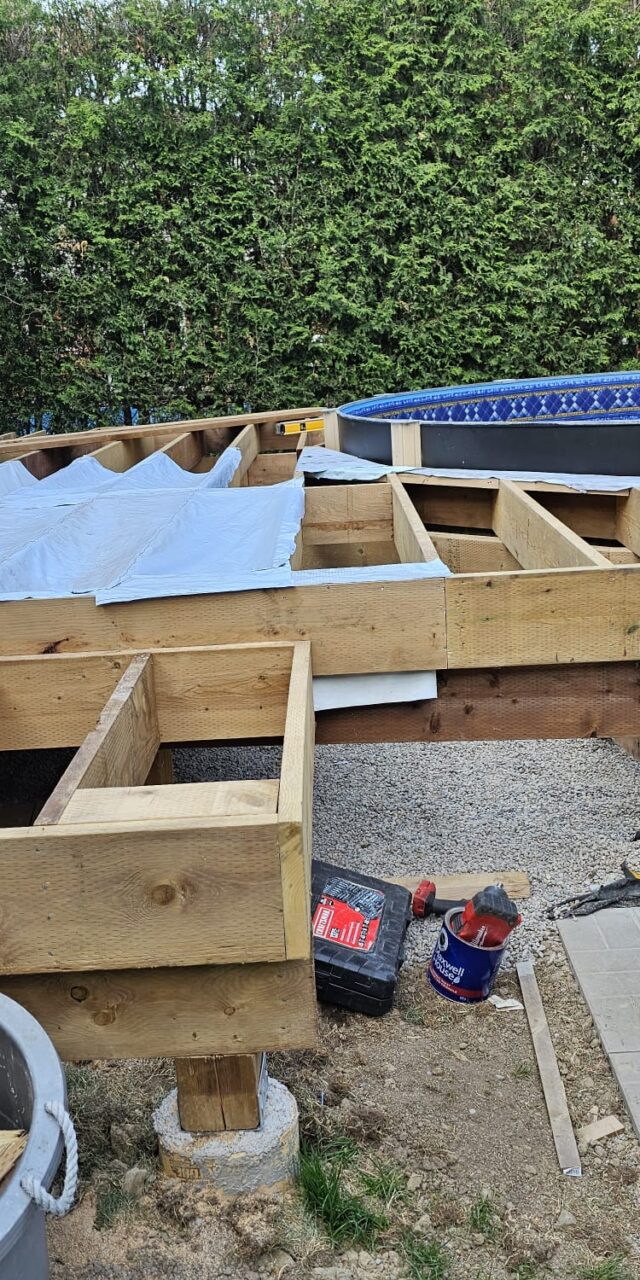
If you use 2×12 beams instead of 2×8 beams, you can usually space your support posts farther apart. That means fewer posts and fewer footings.
But if you choose 2×8 beams, those posts need to be closer together. Now you’ll need more footings — but each footing can often be smaller, because it’s carrying less load.
So which option is better?
Neither. You’re just moving costs and complexity around.
The same logic applies to joists. Smaller joists mean beams need to be closer together. Larger joists allow longer spans but increase the load on the beams and posts below.
Everything is connected.
The “low deck” problem nobody thinks about
Here’s a real-world scenario that surprises people all the time.
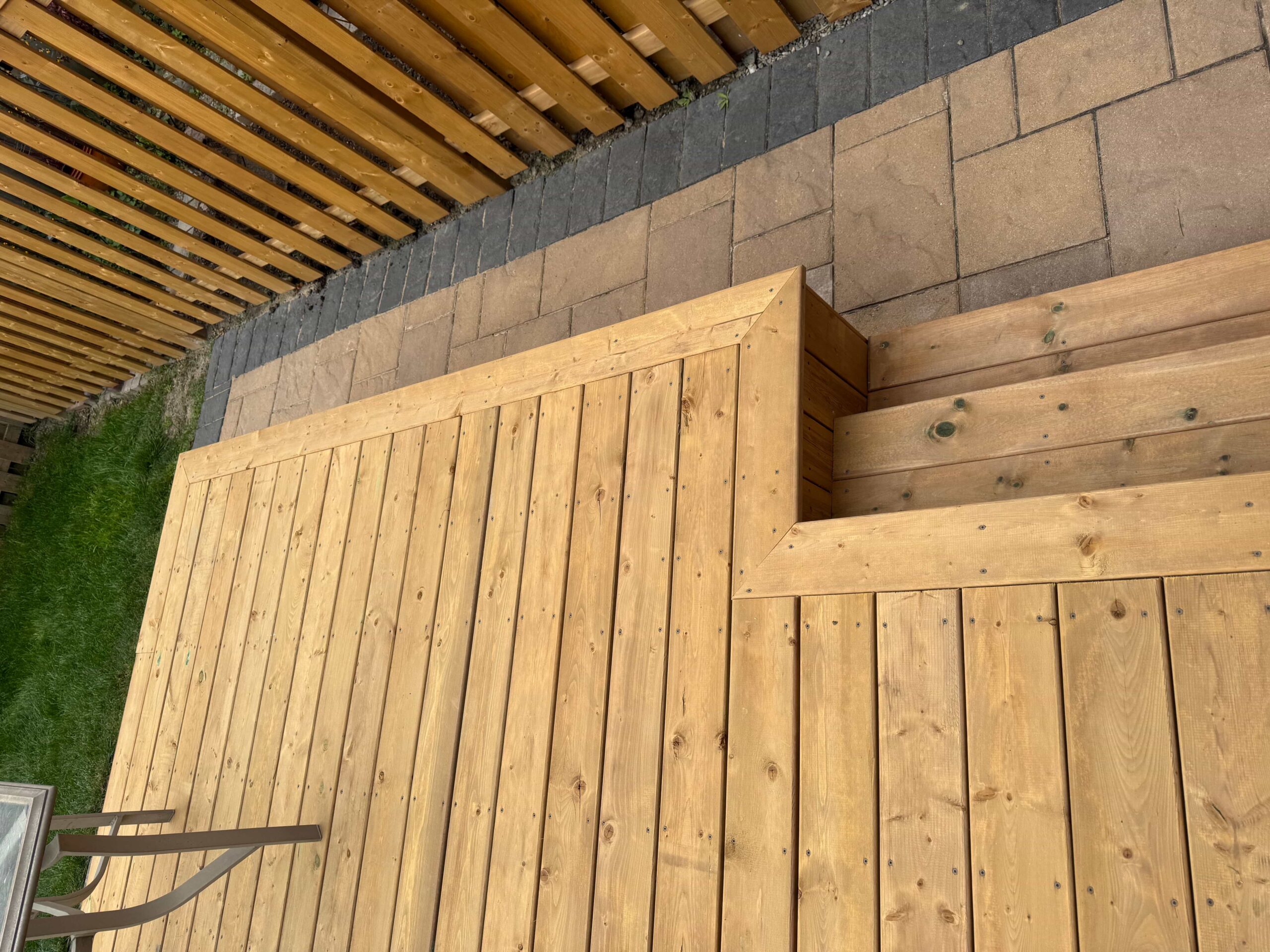
What if you want your deck to be only 10 inches off the ground?
Suddenly, you can’t just throw 2×12 framing at the problem. There physically isn’t enough room. Now you’re dealing with:
- smaller framing members
- joist hangers
- tighter tolerances
- much less forgiveness
Low decks often look simple, but they can actually be harder to frame cleanly than taller ones.
This is where poor planning really starts to hurt.
Cost isn’t usually the deciding factor people think it is
In the context of an entire deck build, the difference in cost between:
- 2×8 vs 2×10
- 2×10 vs 2×12
…is usually minor.
Labour, footings, piles, access, and decking material almost always dwarf the cost difference of slightly larger lumber. Trying to save money by undersizing framing often costs more in the long run — either in rework, bounce, or regret.
The real bottom line
What makes them painfully expensive is poor planning.
Time and money spent on:
- proper drawings
- load calculations
- engineered opinions
…is almost never wasted. It’s what prevents last-minute changes, failed inspections, and structural compromises.
There is no perfect framing package that works everywhere. A well-framed deck isn’t about using the biggest lumber possible — it’s about choosing materials that work together, for your height, your soil, and your layout.
Get that part right, and the rest of the build actually becomes enjoyable.