

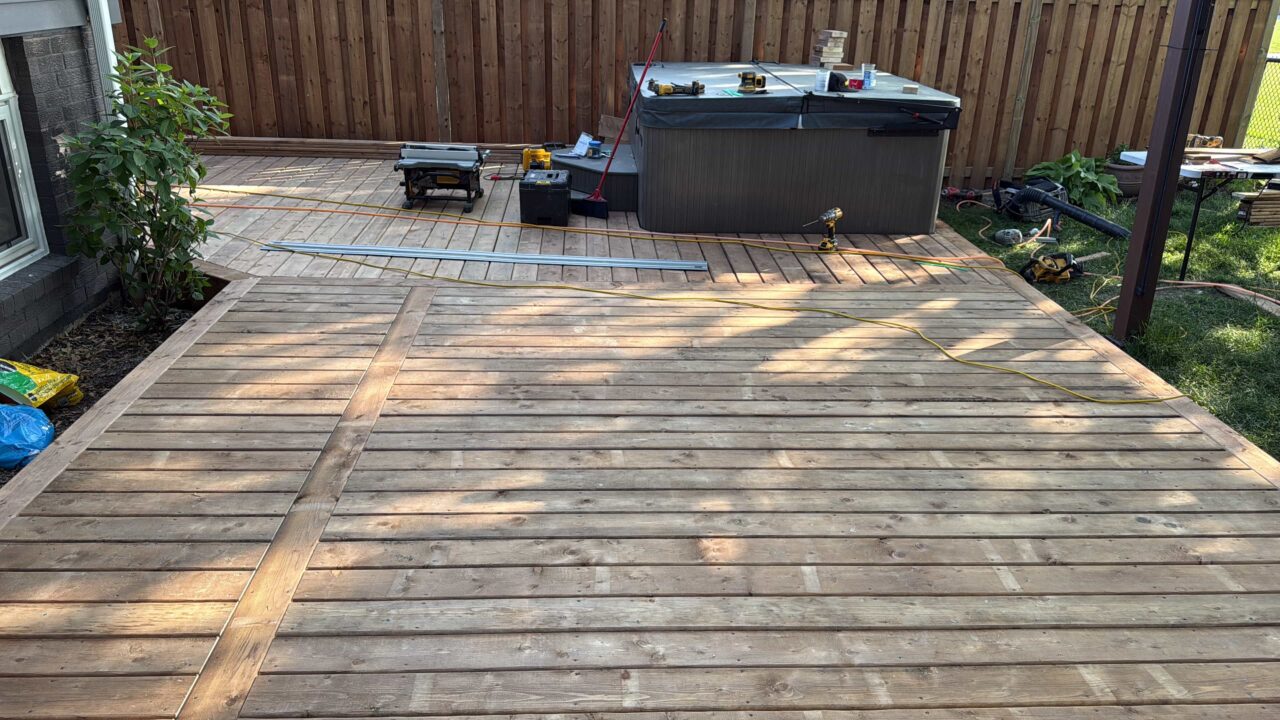
Why Very Low Decks Often Cost
OVERVIEW
Customer:
“Okay, wait… if my deck is 8 feet off the ground, it costs more than if it’s 3 feet off the ground, right?”
Us:
“Yep.”
Customer:
“So the lower it gets, the cheaper it gets?”
Us:
“Generally, yes.”
Customer:
“Perfect. I want it one foot off the ground.”
Us:
“…yeah, that one’s going to cost more.”
Customer:
“But it’s LOWER.”
Welcome to one of the most confusing realities of deck building:
lower does not always mean easier — or cheaper.
Why taller decks are actually simpler to build
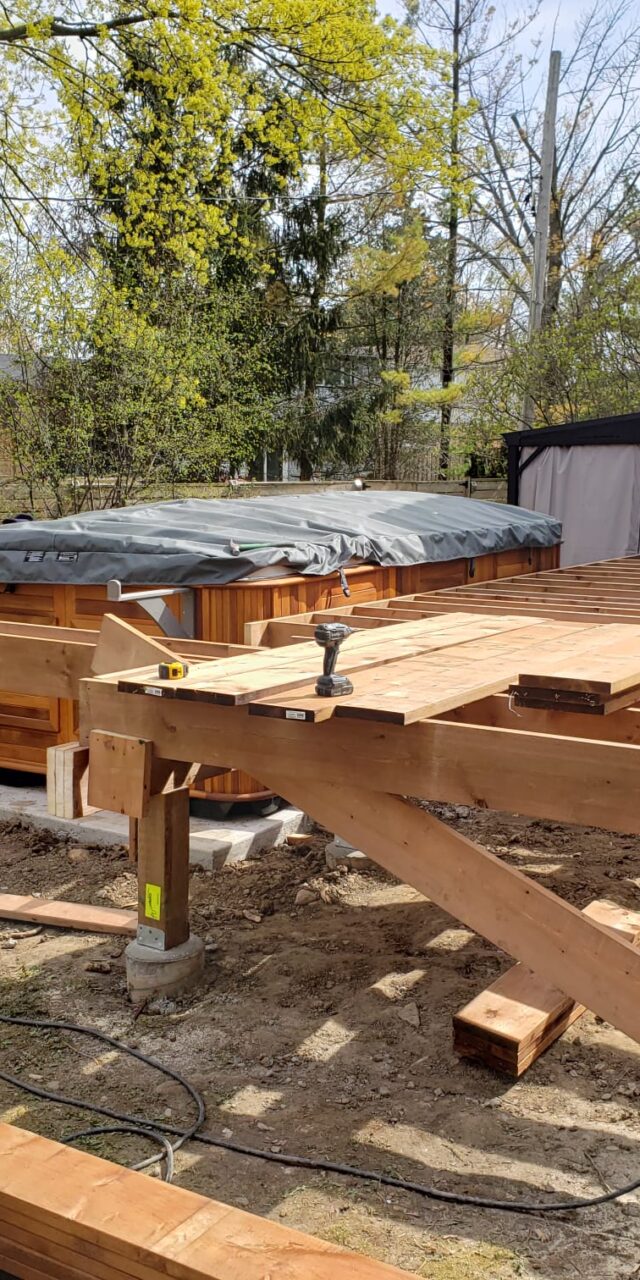
On a typical deck that’s a few feet off the ground, the process is surprisingly forgiving.
Your footings or piles don’t all need to be perfectly level with each other, because you can simply cut the posts to height before installing the beams. The beams themselves don’t even have to be perfectly parallel to the house. Once they’re up, you cut your joists to length, install them, and then attach the rim board to the ends of the joists. The rim board becomes your straight reference, and making it parallel to the house is easy.
From there, it’s smooth sailing. Joists go on every 16 inches, the rim board ties everything together, and suddenly you’re ready for deck boards.
It’s efficient, fast, and very forgiving of small imperfections.
This is why many decks that are higher off the ground are actually easier to build cleanly.
Now try doing that with a deck 12 inches off the ground
This is where things get painful.
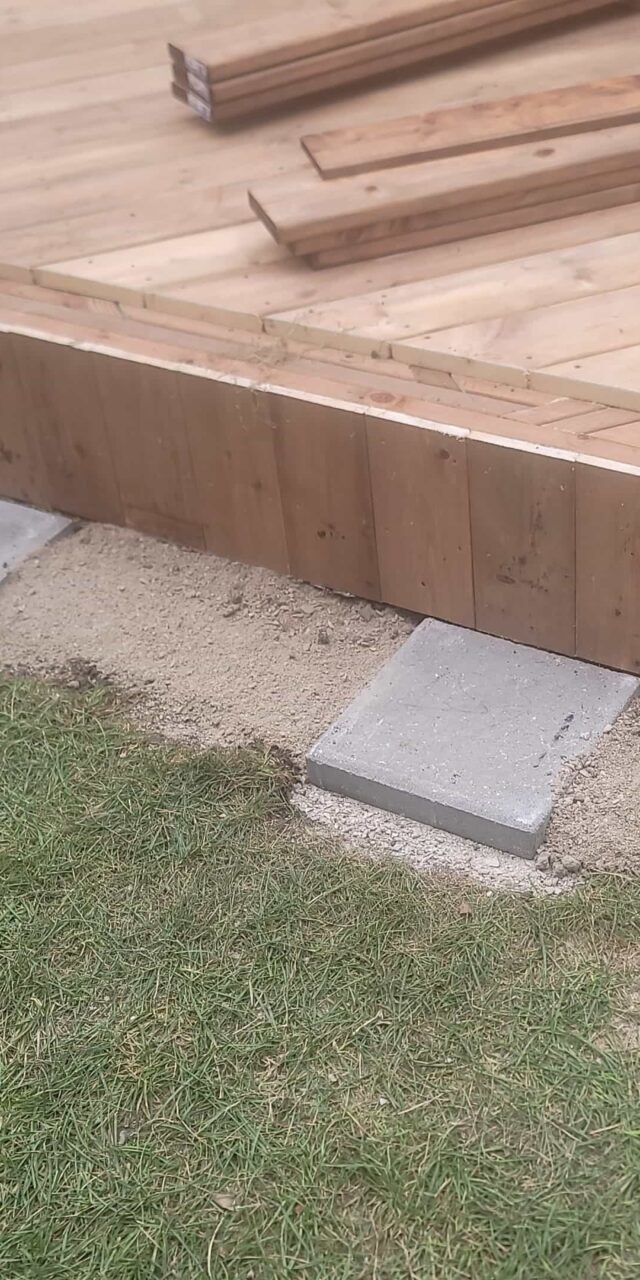
Right away, you lose options. You can’t just throw 2×12 beams on top of posts, because you physically don’t have the height. You need room for beams, joists, and deck boards — all within a very tight vertical space.
So now you’re forced to use smaller beams, which immediately means more support posts. More posts means more footings or piles. And unlike taller decks, those footings now need to be very precisely level, because your highest footing determines the maximum thickness of your beam. There’s no post height to “cheat” with later.
Miss it by even a little, and everything downstream is affected.
When the beam is the rim board
Here’s the part that really trips people up.
On a taller deck, the beam sits under the joists and the rim board gets attached to the ends of the joists later. That gives you flexibility. If the beam is slightly out of parallel with the house, it’s not a big deal — the rim board straightens everything out.
On a very low deck, that luxury disappears.
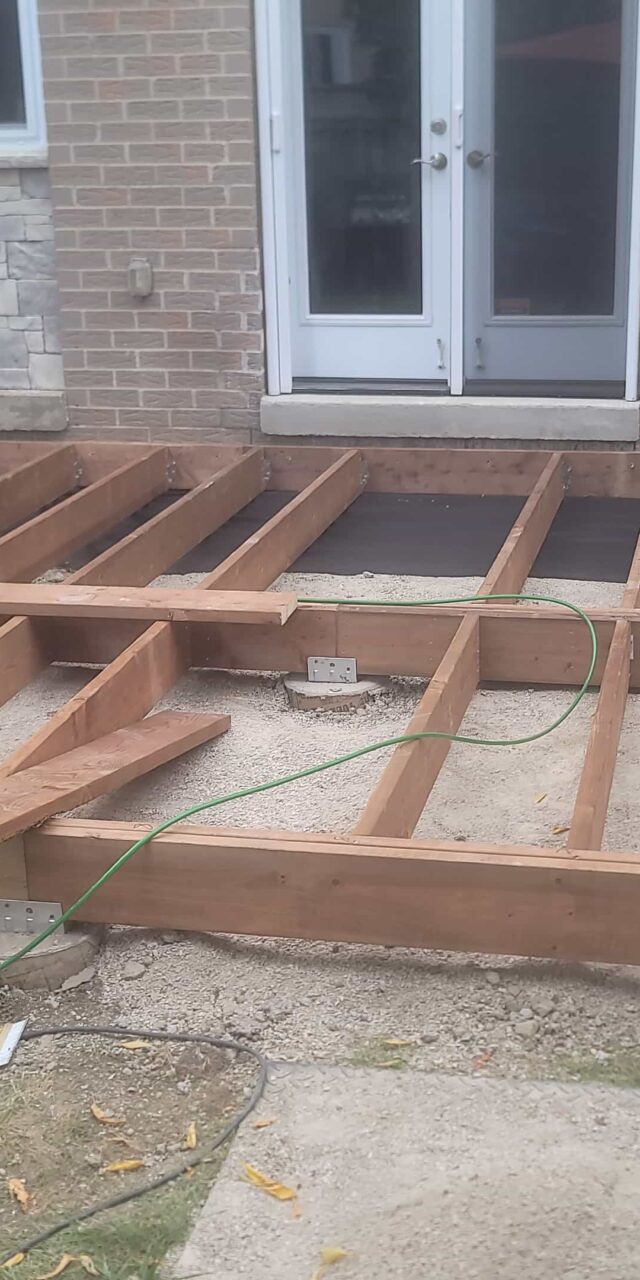
In many low-profile designs, the beam itself becomes the rim board. There’s no extra framing height to hide mistakes. That means the beam must be perfectly parallel to the house
There’s no room for adjustment later. If the beam is off, the entire deck is off.
Precision suddenly matters a lot more.
Framing suddenly gets way more complicated
On a taller deck, joists sit nicely on top of beams.
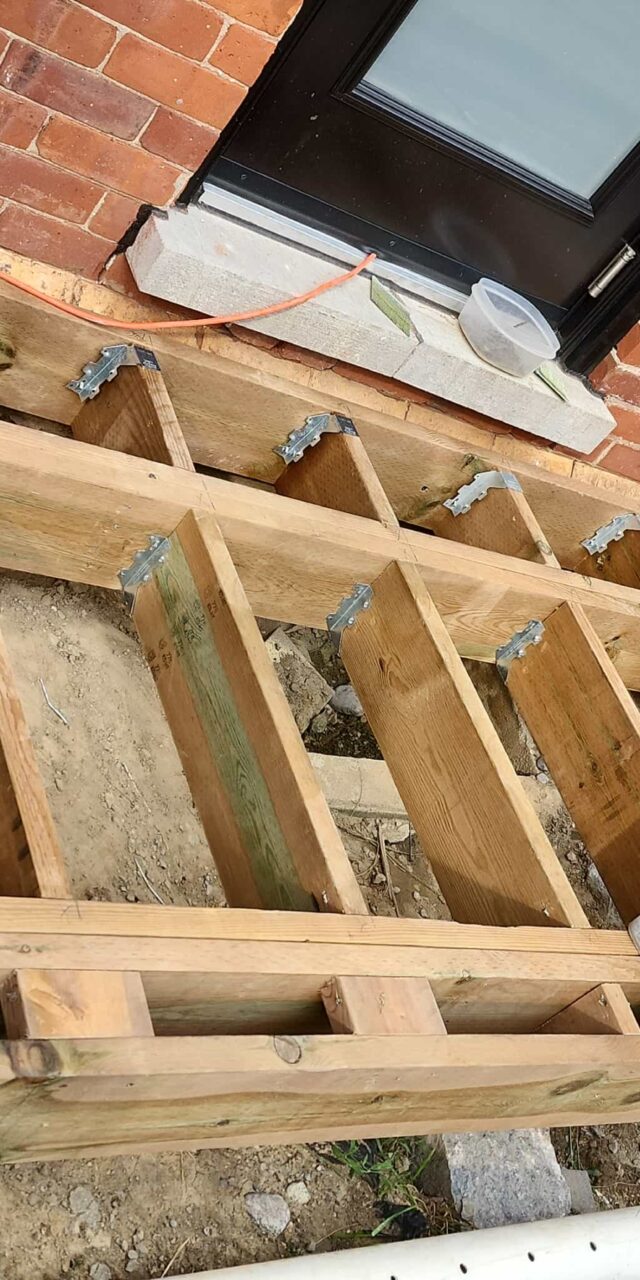
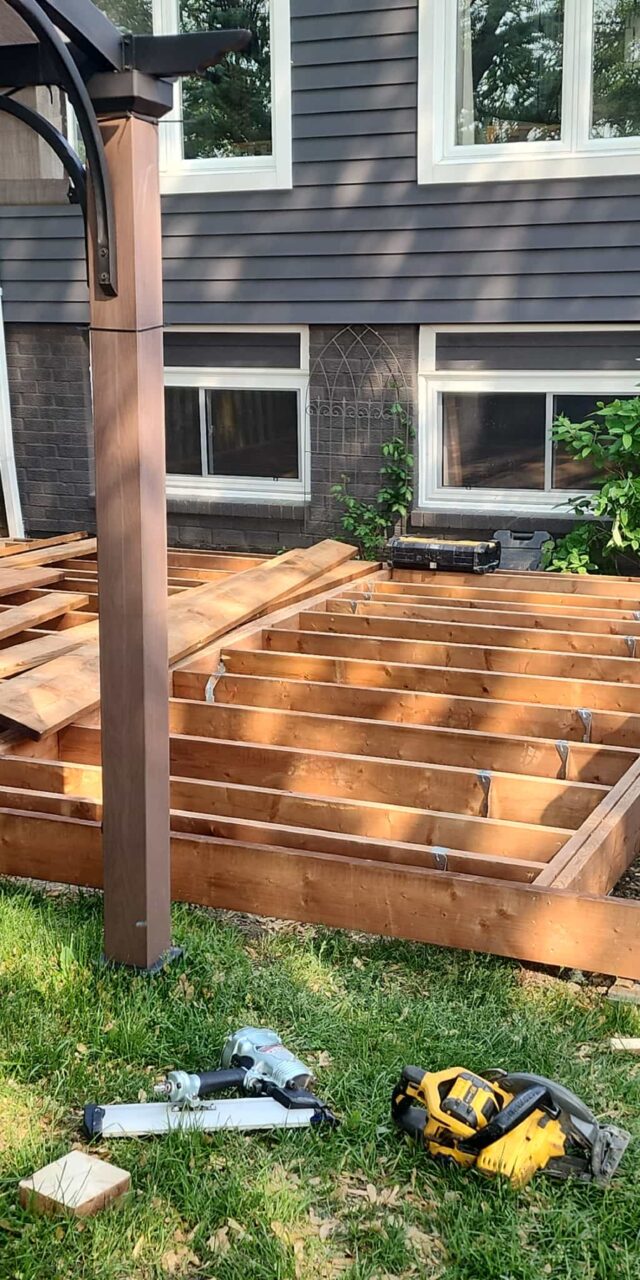
On a very low deck, that’s no longer possible. If you put the joists on top of the beams, you blow past your height limit instantly.
So now every joist has to be:
- cut to fit between the beams
- attached with joist hangers
- perfectly flush with the top of the beam
Every. Single. One.
What’s normally the fastest part of framing becomes slow, careful, detail-heavy work. There’s no room for error, no room for adjustment, and no room for sloppiness.
And don’t forget the dirt
Here’s another thing people don’t think about.
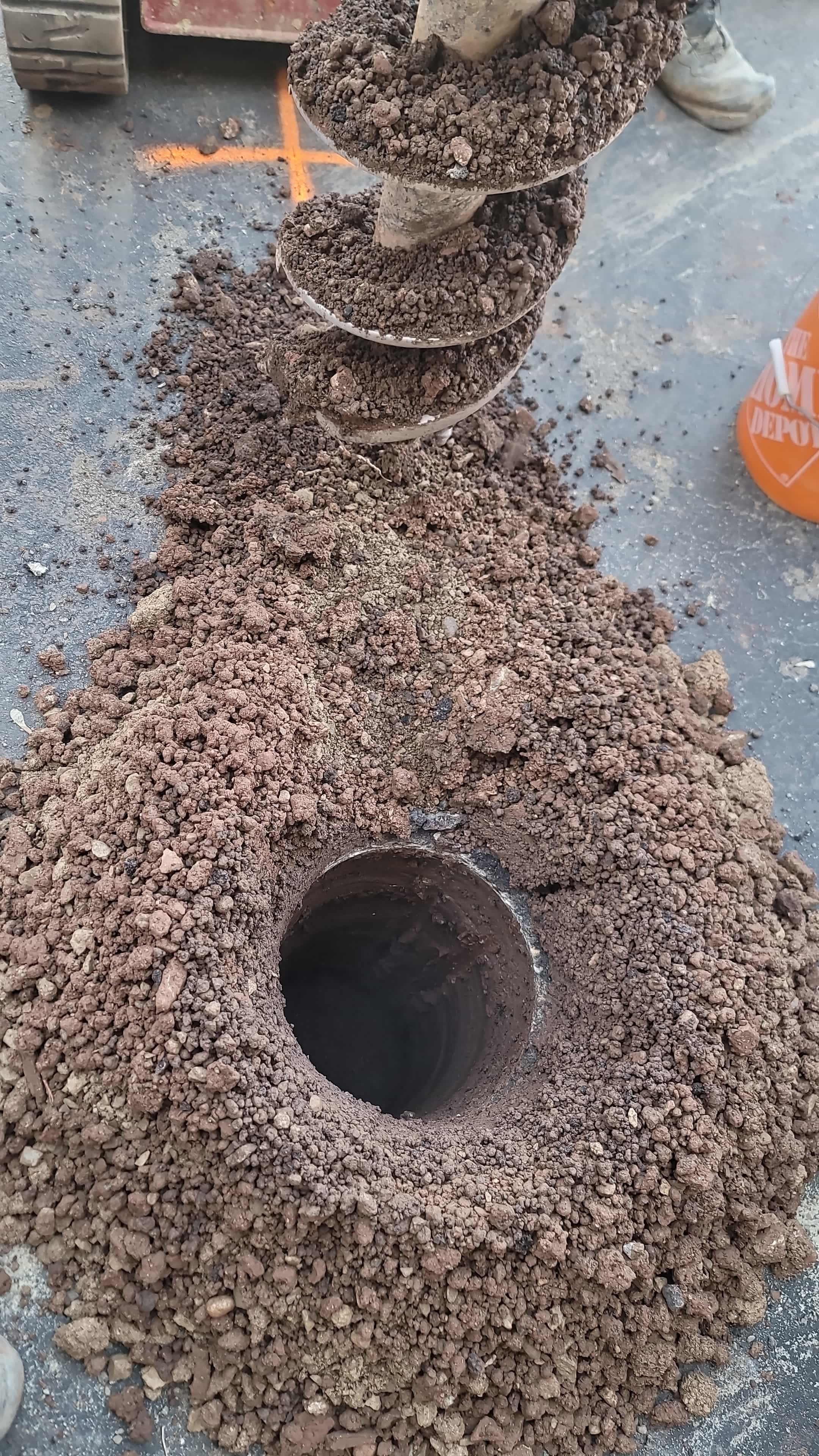
When you drill footings for a low deck, you can’t just leave the excavated dirt under the deck. There isn’t enough clearance. Everything has to be removed, hauled away, or spread elsewhere.
That’s more labour, more time, and more cleanup — all before framing even starts.
Lower isn’t always easier
On paper, a low deck sounds simple. In reality, it often requires:
- tighter tolerances
- more supports
- more precise footing elevations
- more complex framing
- more labour
The framing portion alone can take significantly longer than a deck that’s higher off the ground.
So while it feels logical to assume “less height equals less cost,” the opposite is often true once you get close to ground level.
The real takeaway
Deck pricing isn’t linear.
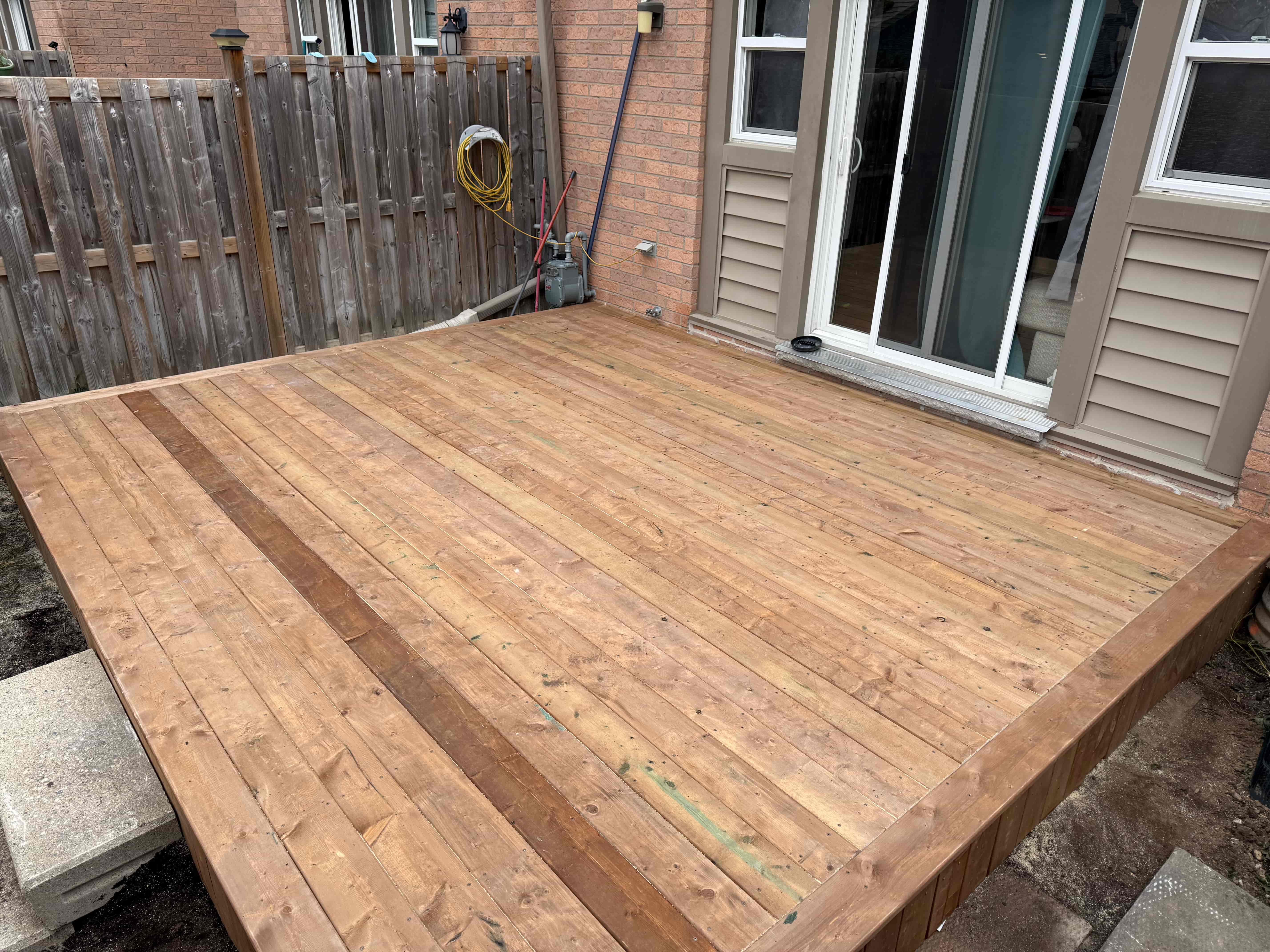
There’s a sweet spot where decks are high enough to be forgiving but low enough to avoid railings and stairs. Once you go very low, everything gets tighter, slower, and more technical.
Lower decks can look great — but they’re rarely the easiest option.
So when someone tells you a one-foot-off-the-ground deck costs more than a three-foot one, they’re not upselling you. They’re just being honest about how much harder it is to build correctly.
Sometimes, lower just means harder.